
 English
 中文简体

TBM crane
TBM crane
TBM crane
TBM crane
TBM crane
TBM crane
TBM crane
TBM crane
TBM crane
TBM crane
TBM crane
TBM crane
TBM crane

Industry News
 Oct 26 , 2026
How Does a Chain Fall Work? A Look Inside the Manual Chain Hoist Mechanism
Oct 26 , 2026
Content
- 1 What a Chain Fall Actually Is
- 2 The Parts Inside a Chain Fall
- 3 Step by Step: How Pulling a Hand Chain Lifts a Load
- 4 Why the Load Holds the Moment You Let Go
- 5 How a Chain Fall Compares With Other Hoists
- 6 Reading the Numbers on a Chain Fall
- 7 Keeping a Chain Fall Working Safely
- 8 When a Manual Pull Stops Making Sense
- 9 From a Single Hoist to a Whole Workstation
A chain fall is one of those tools that looks almost too simple for the work it does. A loop of chain hangs from the housing, you pull steadily on one side, and a load of several hundred kilograms rises a few centimetres at a time. Anyone who has watched a chain fall lift an engine block out of a truck or raise a steel beam into position has seen the result, but the reason it works sits hidden inside the housing: a compact gear train, a pocketed wheel and a brake that applies itself.
This article follows the mechanism from the hand chain you pull to the hook at the bottom, explains why the load stays exactly where you leave it, and compares the manual chain fall with the powered hoists that take over once lifting becomes a daily production task.
What a Chain Fall Actually Is
In North America, "chain fall" is the everyday name for a manual chain hoist. In the UK, Australia and much of Asia, the same tool is usually called a chain block or a hand chain hoist. All three names describe one machine: an overhead lifting device with an endless hand chain, a load chain and a built-in brake, hung from a beam, a trolley or a hook.
It is worth separating a chain fall from two lookalikes. A lever hoist, often sold as a come-along, replaces the hand chain with a short lever and is built more for pulling and tensioning than for repeated vertical lifting. An electric chain hoist keeps the same pocketed-wheel layout but drives it with a motor. A chain fall does neither. It relies entirely on the operator's arm, which is exactly why it stays popular for maintenance work, one-off lifts and locations with no power supply.
The Parts Inside a Chain Fall
Open the housing of a typical chain fall and you will find fewer than a dozen working parts, each with a clear job:
- Hand chain and hand wheel — the endless loop the operator pulls, wrapping around a pocketed wheel on the input shaft.
- Pinion shaft — the small input gear that the hand wheel turns.
- Gear train — one or two reduction stages, often helical, that multiply hand force by roughly twenty to sixty times or more.
- Load sheave — the grooved pocket wheel that grips the load chain and carries it link by link.
- Load chain — a calibrated, high-strength chain, usually grade 80 or grade 100, running in one, two or three falls depending on capacity.
- Automatic brake — a friction disc pack that is squeezed tighter as the load increases, so braking force grows with the weight being held.
- Hooks and bottom block — the top hook attaches to the support, the bottom hook carries the load, and on multi-fall units a sheave block doubles the chain over.
- Body plates, guides and stripper — the frame that keeps every shaft aligned and the stripper that peels the chain cleanly out of the pocket wheel.
Step by Step: How Pulling a Hand Chain Lifts a Load
The sequence is short and completely mechanical. Nothing about it depends on brute strength, because every stage trades distance for force.
- You pull down on one side of the hand chain. The loop turns the hand wheel, which turns the pinion shaft with it.
- The pinion drives the gear train. A small gear spinning fast becomes a large gear turning slowly with far more torque, and this is where most of the lifting force is created.
- The final gear turns the load sheave. Its pockets are shaped to the links of the load chain, so the chain cannot slip through; it is carried around the wheel instead.
- As the sheave rotates, chain is fed in on one side and stripped out on the other. The chain therefore travels through the hoist, and the bottom hook rises by that distance.
- On a two-fall hoist, the chain runs down, around a sheave in the bottom block and back up. The load then rises at half the chain speed with roughly half the pull, at the cost of twice the chain travel.
- To lower, pull the opposite side of the hand chain. The sheave turns the other way, and the brake releases just enough to let the load down under control.
Why the Load Holds the Moment You Let Go
The brake is the part that surprises people most. Let go of the hand chain with a tonne hanging on the hook and nothing moves, because the hoist has already applied its own brake.
Most manual chain falls use a load-actuated friction brake, often described as a Weston or screw-and-disc brake. The load sheave sits on a threaded shaft together with a ratchet wheel and a stack of friction discs. When the load pulls downward it tries to rotate the sheave backwards, and that reverse movement screws the disc pack together against the ratchet wheel until the friction exceeds the load torque. A pawl stops the ratchet wheel from turning in the lowering direction. The heavier the load, the harder the brake grips, which is why these hoists fail safe rather than fail open.
The brake does have enemies. Oil or grease that reaches the friction surfaces reduces grip, and worn discs, a stretched pawl spring or a chipped pawl tooth can let a load creep downward. That is why a chain fall that has been dropped, submerged or left out in the rain deserves a proper inspection before it is used again.
How a Chain Fall Compares With Other Hoists
Manual chain falls are still specified for good reasons, but they are not the answer to every lifting problem. The table below sets out the practical differences.
| Hoist type | Power source | Typical capacity | Load held by | Best suited for |
|---|---|---|---|---|
| Chain fall | Hand chain | 0.25 to 20 t | Load-actuated friction brake | Maintenance, rigging, sites without power |
| Lever hoist | Hand lever | 0.25 to 9 t | Ratchet and friction brake | Pulling, tensioning, tight spaces |
| Electric chain hoist | Motor | 0.1 to 5 t | Motor brake plus load brake | Repetitive lifts at low to medium capacity |
| Electric wire rope hoist | Motor | 0.5 to 80 t | Motor brake plus load brake | Frequent lifting, long lifts, higher capacity |
The rule of thumb many riggers use is simple: if you can count the lifts you will make today on your fingers, a chain fall will do the job. If the count runs into hundreds, power pays for itself quickly.
Reading the Numbers on a Chain Fall
Before choosing a unit, five figures on the nameplate and data sheet are worth understanding.
- Rated capacity — the maximum working load, stamped on the body. It applies to the hoist, not to the beam above it.
- Number of falls — how many runs of chain carry the load. More falls mean higher capacity and a slower lift for the same pull.
- Standard lift height — most stock units ship with three metres of lift, and longer chains are available.
- Hand chain effort — the pull force needed at rated load, usually quoted in newtons or kilograms.
- Duty — manual hoists are intermittent-duty tools, built for occasional lifts rather than continuous cycling.
Keeping a Chain Fall Working Safely
A chain fall is forgiving, but it is not indestructible. A short check before each use catches almost every problem before it turns into an incident.
- Body plates — look for cracks, distortion or bent side plates. A twisted frame means the shafts are no longer aligned.
- Load chain — check for stretch, gouges and bent links, and measure the pitch against the manufacturer's limit. Chain that has been heated, welded or badly corroded is no longer rated.
- Hooks — inspect for cracks and for a throat opening that has been stretched. Safety latches should close freely.
- Load pin, guide and stripper holes — examine them for signs of wear and stretch, since they keep the chain running true through the pocket wheel.
- Brake — with no load attached, the hand chain should feel firm rather than loose. A load that creeps downward means the brake needs service.
- Hand chain — a twisted or snagged hand chain jams the hand wheel, and a jammed descent is one of the most common causes of chain hoist accidents.
When a Manual Pull Stops Making Sense
There is a point in every workshop where the chain fall that solved last year's problem becomes this year's bottleneck. Long lifts, high hook heights, dozens of cycles per shift and loads that must be held in position while someone works underneath all push the decision toward power.
An electric chain hoist keeps the familiar mechanics of hand wheel, gear train and load sheave, but replaces the hand chain with a motor and a control pendant. Lifting speed and repeatability improve, and the operator's shoulder is spared.
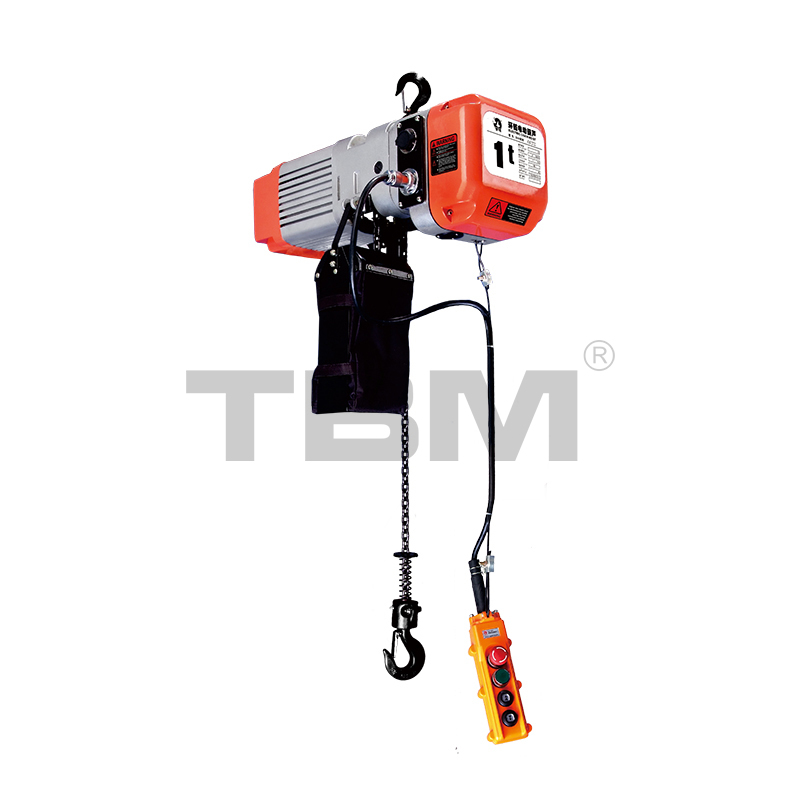 SHH-A Electric Chain Hoist SuppliersAs China SHH-A Electric Chain Hoist Manufacturers and SHH-A Electric Chain Hoist Suppliers , Zhejiang Shuangniao Lifting Equipment Co., Ltd. is a special equipment com...View Product →
For heavier loads, longer lifts or a bridge crane that runs the length of the bay, a wire rope hoist is often the better match. The rope is easier to guide over long distances and handles higher capacities without the dead weight of a comparable chain.
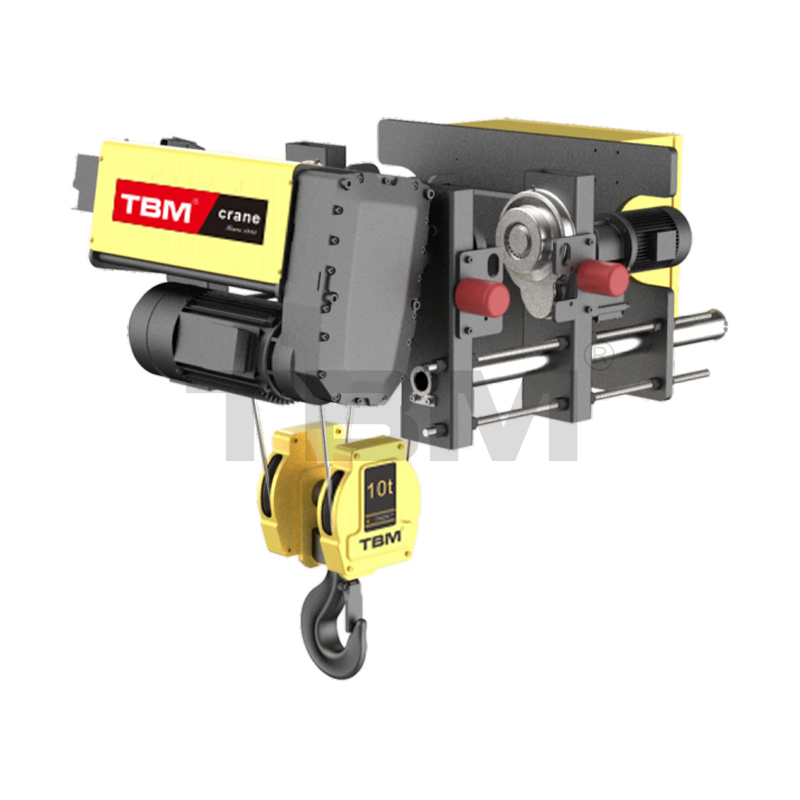 SHA8 Electric Wire Rope Hoist for Industrial LiftingCustomizable 1–10 ton wire rope hoist with 10–30 m lift height, PLC control, and safety features for heavy industrial material handling.View Product →
From a Single Hoist to a Whole Workstation
Most lifting questions start as a hoist question and end as a layout question. Once the load has to travel sideways, a fixed suspension point is no longer enough, and that is when a light crane system such as a jib arm or a profile rail track turns one hoist into a working area.
We build our hoists around exactly that path, from an electric chain hoist on a workshop beam to complete light crane systems, and the same progression shows up again and again in our case studies.
A chain fall works because a small, fast movement of your hand is converted into a large, slow force at the load sheave, and because a brake that feeds on the load itself takes over the moment you stop pulling. It is elegant, dependable and easy to inspect, which is why the design has barely changed in a century.
Whether you stay manual or move to a powered hoist, the questions are always the same: how heavy, how high, how often, and who is holding the load while it hangs. If you are working through those answers for a particular bay or workstation, our team is glad to talk it through, and you can reach us here.
News

The company has always attached great importance to new product development and technological innovation, focusing on a high starting point, high configuration
Product Categories
Contact Us

No. 9 Tenglong Road, Huangze Industrial Function Zone, Huangze Town, Shengzhou City, Zhejiang Province, China

info@tbmhoist.com

+86 - 18957539688
