
 English
 中文简体

TBM crane
TBM crane
TBM crane
TBM crane
TBM crane
TBM crane
TBM crane
TBM crane
TBM crane
TBM crane
TBM crane
TBM crane
TBM crane

Industry News
 Nov 09 , 2026
Pendant Control Guide: Choosing the Right Station for Your Electric Hoist
Nov 09 , 2026
Content
- 1 What a Pendant Control Really Is
- 2 How a Pendant Control Works
- 3 Types of Pendant Control Stations
- 4 Where Pendant Controls Are Used
- 5 Wired Pendant or Wireless Remote?
- 6 Cable Handling, Suspension, and Strain Relief
- 7 How to Specify a Pendant Control for Your Hoist
- 8 Installation, Inspection, and Troubleshooting
- 9 Matching a Pendant Control to the Hoist and Crane
A pendant control is the handheld station an operator uses to run a hoist or crane while standing close to the load. It hangs from the equipment on its own cable, and it is usually the first thing a new operator touches and the first thing an experienced one complains about. We have been building electric hoists since 1984, and the pendant is still where most day-to-day opinions about a crane are formed.
This guide covers how pendant controls work, which station suits which job, how to keep the cable and enclosure in good condition, and how to match a pendant to a wire rope hoist, a chain hoist, or a light crane system. It is written for the people who specify, install, and repair this equipment rather than for a catalogue page.
What a Pendant Control Really Is
A pendant control, also called a pendant station, push button station, or control pendant, is a hardwired operator interface suspended from a hoist, trolley, or crane bridge. It puts the operator within sight of the load while keeping them clear of the moving parts. The buttons it carries reflect the motions of the machine: hoist up and down, trolley left and right, bridge forward and reverse, and sometimes an auxiliary function such as a second hoist or a magnet.
The enclosure matters more than it looks. Industrial stations are normally made from impact-resistant thermoplastic or a reinforced composite, with a gasket and a rubber boot around each button for dust and water resistance. A mushroom-head emergency stop is standard on crane pendants, and two-step buttons are common when the hoist has two speeds. The pendant is only the front end of the system, though. Behind it sit contactors or a variable frequency drive, a control box, the wiring, and the motor itself, and a fair share of pendant faults turn out to be faults somewhere in that chain.
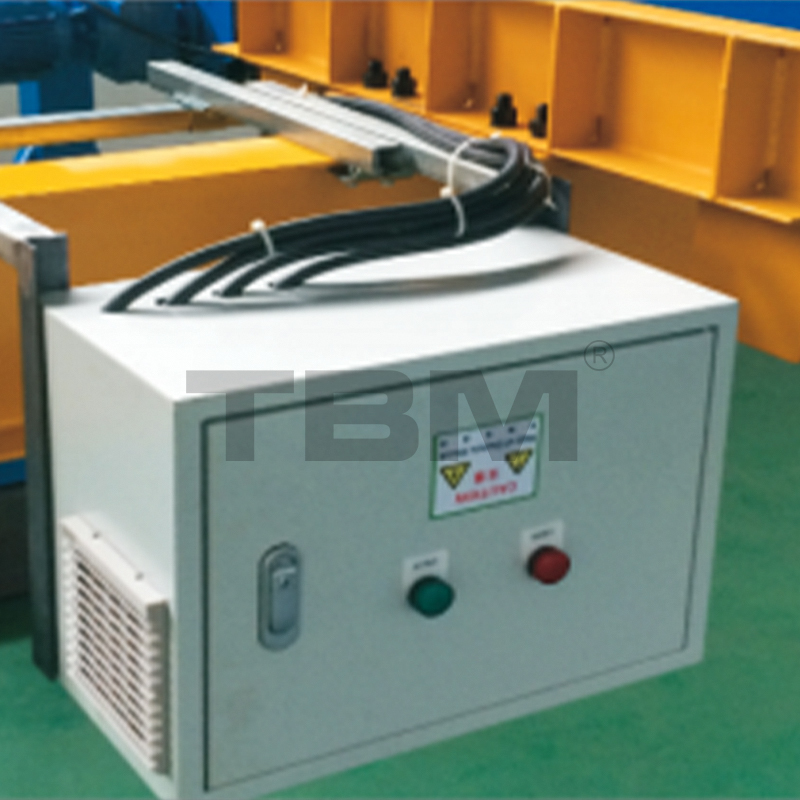 Crane Control Box for Electrical and Mechanical Crane SystemsThe enclosure houses control circuits, operator interface, contactors, relays, and breakers to coordinate motor, lifting, and travel functions in demanding industrial crane installations.View Product →
How a Pendant Control Works
Pressing a button closes a low-voltage control circuit, usually somewhere between 24 V and 110 V. That circuit energizes the coil of a contactor or sends a command to an inverter, and the main circuit then supplies the motor. Because the control voltage is low and kept separate from the main supply, the cable and the buttons are far safer to handle than the motor circuit would be.
Two-speed pendants work on the same principle with one extra step. The first detent closes a contact and the hoist runs at slow speed; pressing further closes a second contact for fast speed. With an inverter, the pendant simply tells the drive which direction and which speed stage the operator wants, and the drive handles acceleration, deceleration, and braking.
Every direction button on a crane pendant is spring-return, so releasing it opens the circuit and the motion stops. The emergency stop behaves differently: it latches mechanically and cuts the control circuit, which means all motion stops at once and stays stopped until the button is twisted or pulled to release it. That difference is worth explaining to every new operator on the shop floor.
- The operator presses and holds a direction button.
- The pendant closes the low-voltage control circuit.
- A contactor closes, or the inverter receives the command.
- The motor runs and the load moves.
- Releasing the button stops the motion through spring return.
- Pressing the emergency stop cuts the control circuit and locks out all movement.
Types of Pendant Control Stations
Pendant stations are normally described by how many motions they control and how many speed steps each motion has. The table below summarises the configurations we see most often in industrial lifting work.
| Station type | Typical buttons | Best suited to | Points to watch |
|---|---|---|---|
| Single-speed pendant | 2 to 4 | Basic hoists on jib cranes and monorail tracks | Simple and reliable, but positioning is coarse |
| Dual-speed pendant | 4 to 6 | Bridge cranes, workstation and KBK systems | Two-step buttons need clear tactile feedback |
| Multi-function station | 8 or more, with selector | Double girder cranes with auxiliary hoist | Larger enclosure, heavier cable load |
| Wireless push button station | Same as wired versions | Long travel, congested or wet areas | Battery, pairing, and radio interference checks |
| Fixed push button box | 2 to 6 | Workstations, gates, and power units | Not portable, so the operator stays at the panel |
Where Pendant Controls Are Used
The most familiar setting is an overhead bridge crane in a workshop, but pendants appear wherever a machine needs an operator standing near the work. You will find them on monorail hoists along a production line, on jib cranes serving a single workstation, on gantry and mobile gantry cranes, and on light crane systems where the operator walks with the load rather than sitting in a cabin.
Environment shapes the choice as much as the machine does. Machining and assembly shops are usually content with a standard dust-resistant enclosure. Foundries, plating lines, outdoor yards, and shipyards call for higher ingress protection and a housing that survives knocks against steel. Marine duty deserves particular attention, which is why our range includes a chain hoist built specifically for shipboard conditions. When you would like to see how these stations are put together with hoists in practice, our application examples are a reasonable place to start.
See how hoists and control stations are combined in real installations.
Wired Pendant or Wireless Remote?
A wired pendant has no batteries, no pairing, and no signal loss. The operator feels the button travel directly, which matters when a load has to be nudged into position. The trade-offs are obvious too: the cable is a wearing part, the operator has to stay within reach of the station, and dragging cable across a busy floor is an accident waiting to happen.
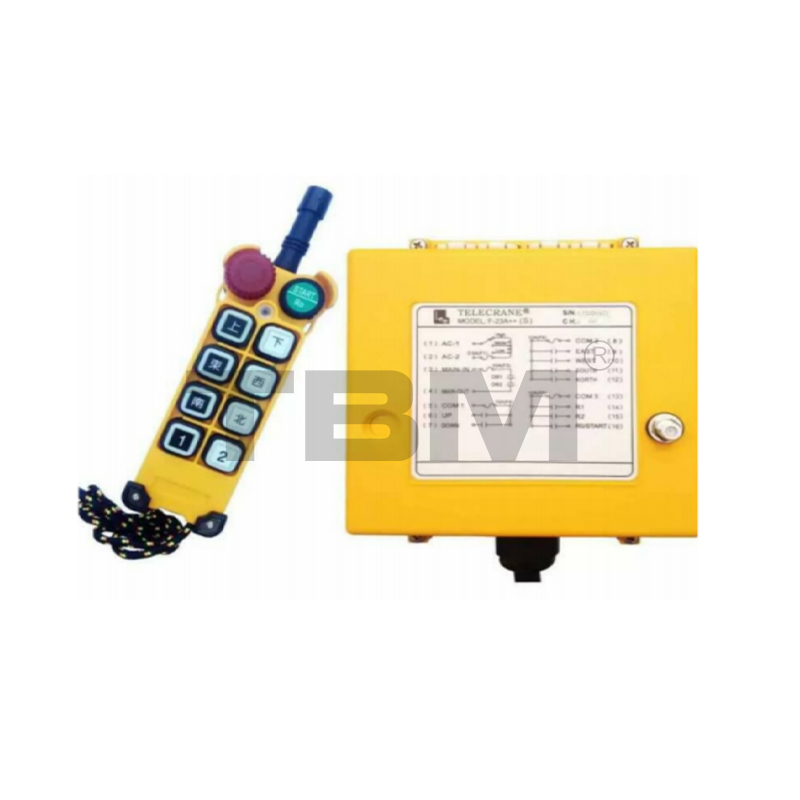 Crane Wireless Remote Control for Flexible Operator PositioningWireless transmitter lets operators control lifting, travel, steering, and speed from a safe distance, with an ergonomic housing and customizable modular controls.View Product →
A radio remote removes the cable and lets the operator choose the safest viewpoint for each lift, which is a real advantage on long runways, in wet areas, and around hot or awkward loads. It adds batteries, a charging routine, and a pairing step that must be checked at every shift change. Many installations end up with both: a pendant as the permanent station and a remote transmitter for the operators who need to move around.
Cable Handling, Suspension, and Strain Relief
The pendant cable is the part most likely to fail first. It should hang from a strain relief or a support trolley that carries the load of the cable rather than pulling on the terminals inside the station. On long runways, a festoon system or a spring cable reel keeps the cable off the floor and out of the way of forklifts and foot traffic. The pendant itself should hang at a comfortable height, roughly between waist and chest level, with enough slack that the operator is never pulling against the cable to reach a button.
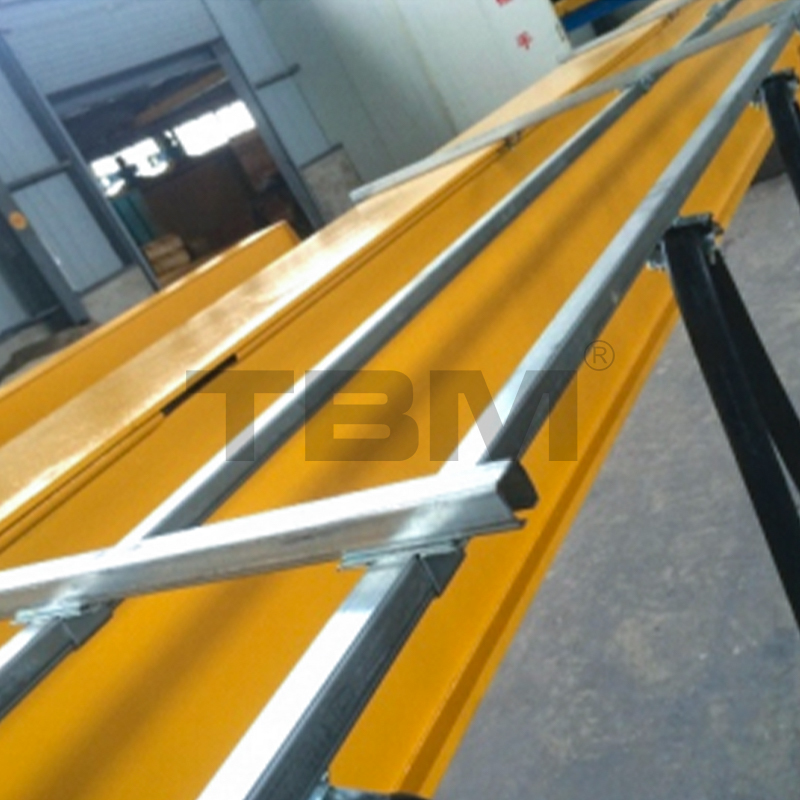 Crane Festoon System for Cable Management and Motion ControlKeeps pendant cables off the floor while supporting remote crane control, target positioning, and automatic adjustment of lifting, travel, and load movement.View Product →
Three habits keep cables alive: never let the pendant rest on the ground, never allow a sharp bend at the gland entry, and never use the cable itself as a handle to drag the station into position. Where the environment is oily or abrasive, a cable with a tougher outer sheath will pay for itself within a couple of years.
How to Specify a Pendant Control for Your Hoist
- List every motion the machine performs, including any auxiliary function.
- Decide whether each motion needs one speed or two.
- Confirm the control voltage and whether the hoist uses contactors or an inverter.
- Choose the ingress protection level that matches the working environment.
- Check the enclosure material and the feel of the button travel.
- Confirm the emergency stop type and how it resets.
- Plan the cable length, suspension method, and strain relief.
- Think about where the operator will actually stand during a lift.
- Ask about spare buttons, boots, and a replacement pendant for the maintenance store.
Installation, Inspection, and Troubleshooting
Control work belongs to a qualified electrician, and any pendant repair should start with isolation and lockout. Once the station is in service, a short monthly visual check catches most problems before they stop production.
- No response at all: check the control circuit fuse, confirm the emergency stop is released, and test cable continuity.
- One direction only: suspect a broken conductor in the cable or a failed contact in the station.
- Intermittent operation: look for a worn cable at the gland entry or a loose terminal.
- Stiff or sticking button: dirt, a worn boot, or a damaged plunger. Replace the contact block rather than lubricating it.
- Cracked housing or water inside: replace the station immediately. Moisture leads to tracking and short circuits.
- Warm or discoloured cable: undersized conductors or loose terminations.
- Pendant swinging or cable dragging: adjust the suspension or add a support trolley.
A yearly insulation and continuity check on the pendant cable is a sensible routine, especially on cranes that run two or three shifts a day. Keeping one spare pendant in the store costs far less than a day of lost output.
Matching a Pendant Control to the Hoist and Crane
Because we build the hoist and the control chain around it, the pendant can be matched to the drive from the outset rather than adapted afterwards. That applies across our wire rope hoist families, including the SHA8 and SHA7 series with their standard headroom, low headroom, and double girder versions, and across the SHH-A, TC, and ZH chain hoist ranges. The same logic extends to the surrounding equipment: the gearmotor, end carriage, inverter, control box, and light crane systems are all part of the same system design, so control voltage, button layout, and cable routing can be settled on paper before anything is installed.
If you are replacing a worn pendant or specifying one for a new hoist, talk to our team and we will help match the station to the drive, the duty, and the working environment.
A pendant control is a small item in the overall cost of a crane, but it sits between the operator and every lift the machine makes. Choose it by the motions you need, the speeds you need, and the conditions it will live in. Then treat the cable and housing as wearing parts, inspect them on a schedule, and replace them without hesitation when they show damage. That is the least glamorous advice in this article, and also the most useful.
News

The company has always attached great importance to new product development and technological innovation, focusing on a high starting point, high configuration
Product Categories
Contact Us

No. 9 Tenglong Road, Huangze Industrial Function Zone, Huangze Town, Shengzhou City, Zhejiang Province, China

info@tbmhoist.com

+86 - 18957539688
