
 English
 中文简体

TBM crane
TBM crane
TBM crane
TBM crane
TBM crane
TBM crane
TBM crane
TBM crane
TBM crane
TBM crane
TBM crane
TBM crane
TBM crane

Industry News
 Nov 02 , 2026
Low Headroom Hoist Guide: How to Choose the Right Model for Tight Spaces
Nov 02 , 2026
Content
- 1 What Low Headroom Really Means
- 2 How the Space Is Recovered
- 3 Comparing the Main Options
- 4 Four Measurements to Take First
- 5 Choosing Between the SHA7 and SHA8 Low Headroom Series
- 6 Tight Buildings Rarely Stop at the Hoist
- 7 Practical Notes from the Workshop Floor
- 8 Getting the Selection Right the First Time
Anyone who has spent a morning wrestling with a load under a low ceiling knows that the difficult part of lifting is rarely the weight. It is the space above the hook. A low headroom hoist exists precisely for that problem: it is built so the hook can travel much closer to the roof, the girder or the pipework overhead without giving up lifting capacity.
TBM Crane has been manufacturing electric hoists since 1984, and low headroom versions have always been among the most requested models from workshops, shipyards and factory buildings that were never designed around modern lifting equipment. Here is what low headroom really means, how these machines recover the space that conventional hoists waste, and what to measure before you place an order.
What Low Headroom Really Means
Headroom is the vertical distance between the highest point of the load, or the hook block with the hoist running empty, and the nearest obstruction above it. In most industrial buildings that obstruction is the bottom flange of the crane girder. In older halls it may be a roof truss, a sprinkler pipe or a ventilation duct.
On a conventional hoist, the trolley frame and the hoist body hang beneath the girder, and that stack adds up quickly: trolley, housing, rope drum or chain sprocket, then the hook block itself. In a hall with only four or five metres of usable height, giving away a metre of it to the machine is an expensive decision.
A low headroom hoist rearranges the same components to shrink that stack. The trolley is usually split into side frames that straddle the girder, the drum sits high and close to the beam, and the gearbox is shortened. The reward is a hook approach measured in centimetres rather than in metres.
How the Space Is Recovered
Wire rope units
In a low headroom wire rope hoist the rope drum is mounted high and close to the girder, and the rope leaves the drum at a shallow angle so the hook block stays tucked up underneath. The trolley wheels are carried on the sides of the frame, which keeps the overall build height low while still allowing the unit to run along a single girder beam.
If you would like to see how that layout looks on a finished machine, our SHA7 low headroom wire rope hoist is a good place to start. It is the model we build most often for buildings where the crane has to fit under an existing roof.
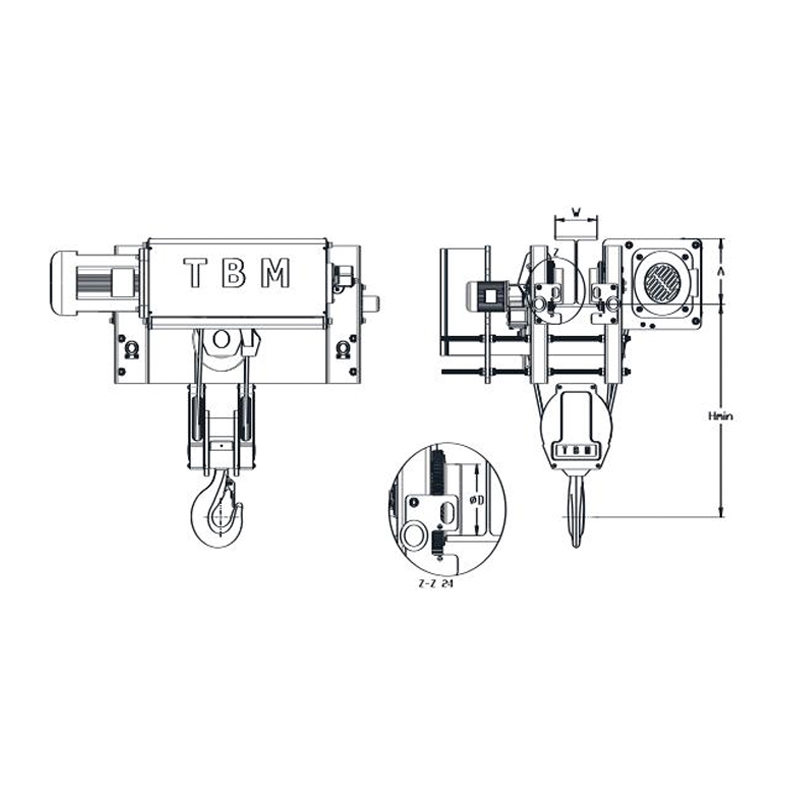 SHA7 Low-Headroom Wire Rope HoistDesigned for low-headroom lifting, this wire rope hoist suits workshops where installation height is limited and precise, smooth lifting is required.View Product →
Chain units
Chain hoists take a different route to the same result. Because a chain sprocket is far smaller than a rope drum, a low headroom chain hoist can be extremely compact, which makes it a natural choice for lighter loads, assembly stations and retrofits into structures that were never intended to carry a crane at all. The trade-off is capacity and continuous running time, so chain units suit shorter, more intermittent lifts.
Comparing the Main Options
The table below sets out the four configurations we are asked about most often. It is a starting point rather than a specification, because the exact hook approach always depends on capacity, lift height and trolley type.
| Configuration | Hook approach to the girder | Where it fits best | Points to watch |
|---|---|---|---|
| Standard headroom wire rope hoist | Largest | Tall modern workshops with demanding duty cycles | Needs full structural clearance and a deeper building envelope |
| Low headroom wire rope hoist | Compact | Single and double girder cranes under low roofs carrying heavier loads | Wider trolley, so check girder width and flange dimensions |
| Low headroom chain hoist | Very compact | Light loads, assembly bays and retrofits into existing structures | Lower capacities and shorter continuous running times |
| Fixed or monorail hoist | Not applicable | Single point lifting where the load does not need to travel | No horizontal movement along the beam |
Four Measurements to Take First
Before you ask for a quotation, four measurements decide almost everything.
- Clearance above the hook path. Measure from the underside of the girder to the lowest obstruction above it, and leave a margin for load sway.
- Required hook approach. Decide how close the hook must come to the structure or to a machine that needs servicing. This is what determines whether you need low headroom at all.
- Lift height plus load height. Add the height of the tallest load to the required lift, because the hook block still needs somewhere to sit at the top of travel.
- Girder width and flange. A low headroom trolley straddles the beam, so the flange width and the side clearance matter as much as the vertical dimension.
Duty cycle and environment deserve a mention too. A hoist running twenty cycles an hour in a foundry is a different machine from one lifting a pump twice a week, and dusty or humid plants need different protection. Mentioning this at the enquiry stage saves a great deal of back and forth later.
Choosing Between the SHA7 and SHA8 Low Headroom Series
Our own low headroom range splits into two families. The SHA7 unit is the workhorse for single girder cranes and moderate loads. The SHA8 low headroom electric wire rope hoist is built for heavier duty, larger capacities and double girder installations where the structure is generous in span but stingy in height.
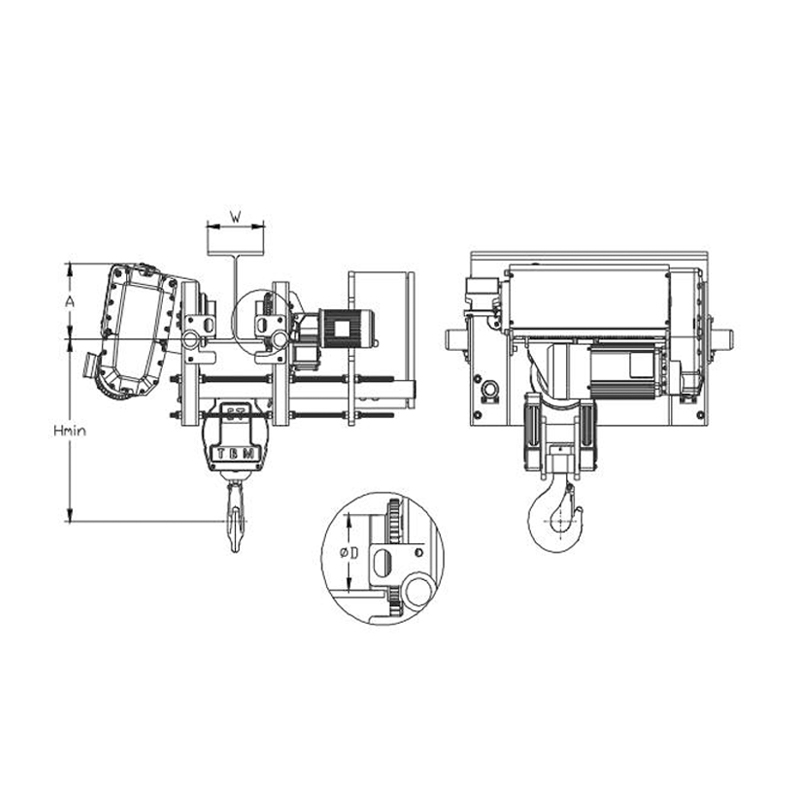 SHA8 Low-Headroom Electric Wire Rope HoistFor heavier-duty or double-girder installations with limited height, this electric wire rope hoist offers variable-frequency lifting control and high-strength wire rope.View Product →
If you are unsure which one fits, the honest answer is that it depends on the load spectrum and how often the crane runs rather than on the price difference. Describe the weight, the span, the lift height and the clearance, and it is usually possible to narrow the choice down in a single conversation.
Tight Buildings Rarely Stop at the Hoist
When the ceiling is low, the crane structure around the hoist usually has to be compact too. That is why a low headroom hoist is often the first component of a wider light crane solution: a KBK crane system for workstation coverage, a jib crane for a single circular area, or an aluminium light crane that spreads the load across a wider footprint than an old roof truss would tolerate.
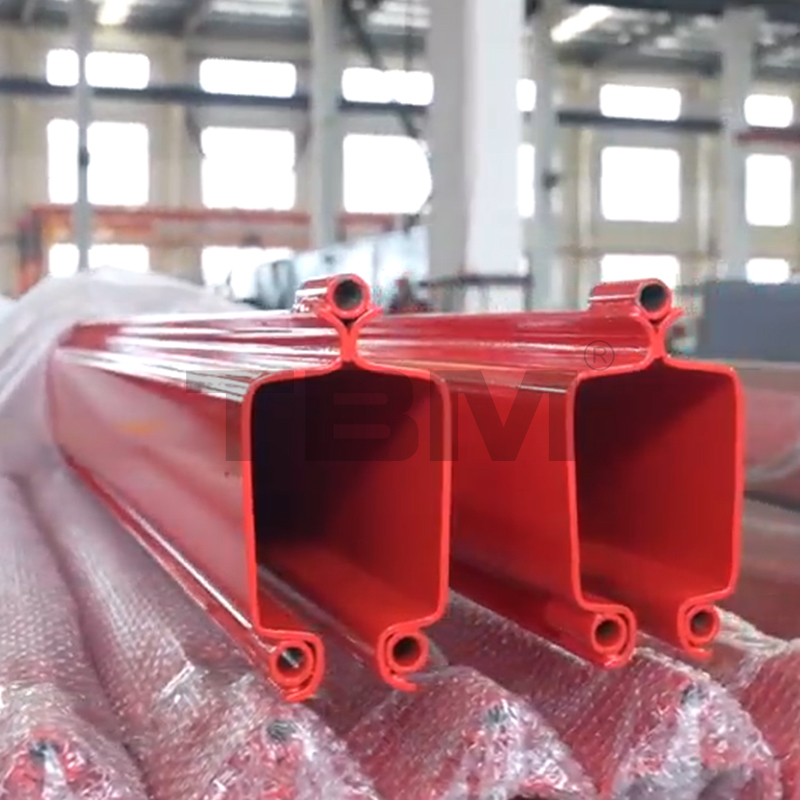 KBK Light Crane System for Workstation CoverageA modular light crane system with monorail, single-beam, double-beam and telescopic forms, suitable for modern production lines and flexible workstation coverage.View Product →
Together, the hoist and the track decide how much of your floor is genuinely served by the crane, not just how much the hook can pick up.
Practical Notes from the Workshop Floor
- Keep the rope or chain path clear. Low headroom designs leave less room for the load to swing, so a slightly off-centre pick rubs more than it would on a standard hoist.
- Check the hook approach again after installation, because as-built buildings rarely match the drawings.
- Inspect trolley wheels and side frames on schedule. They carry the load and take most of the wear.
- For humid, dusty or marine environments, ask about protection before delivery rather than after the first failure.
Getting the Selection Right the First Time
We have been building electric hoists since 1984, in a factory of around 200,000 square metres, producing more than 8,000 units a year for customers in over 120 countries. A large part of what we know comes from the distributor and service network that supports those machines in the field, and a fair part of it comes from jobs that did not go to plan the first time.
If you would like to see how low headroom units behave in real installations, our case studies are a reasonable place to start. And if you would rather simply describe the building and the load, our team is glad to work through the numbers with you, so please get in touch.
News

The company has always attached great importance to new product development and technological innovation, focusing on a high starting point, high configuration
Product Categories
Contact Us

No. 9 Tenglong Road, Huangze Industrial Function Zone, Huangze Town, Shengzhou City, Zhejiang Province, China

info@tbmhoist.com

+86 - 18957539688
