
 English
 中文简体
中文简体
TBM crane
TBM crane
TBM crane
TBM crane
TBM crane
TBM crane
TBM crane
TBM crane
TBM crane
TBM crane
TBM crane
TBM crane
TBM crane

Industry News
 Aug 17 , 2026
Hoist Chain Grades & Sizing: How to Choose, Inspect & Replace Load Chain
Aug 17 , 2026
Content
- 1 Why the Hoist Chain Is the Most Critical Component
- 2 What a Hoist Chain Actually Does, and Why Calibration Matters
- 3 Hoist Chain Grades: What the Markings Really Mean
- 4 How to Choose the Right Hoist Chain for Your Application
- 5 Inspecting Your Hoist Chain: What to Measure and When to Replace
- 6 Practical Mistakes That Shorten Chain Life
- 7 Choose a Hoist Built Around a Reliable Chain
Why the Hoist Chain Is the Most Critical Component
Walk through any workshop where an electric chain hoist has been in service for a few years, and the most worn component you will find is almost always the load chain. Motors can be rewound, brakes can be adjusted, and gearboxes can be rebuilt. A chain, once it has stretched, lost its surface hardness, or developed cracks, has only one destination: replacement. The difficult part is deciding exactly when that replacement is necessary.
The bottom line is that the hoist chain sets the real safety limit of a chain hoist. Choose the wrong grade, let it wear past its tolerance, or mix chain types, and you turn a well-designed hoist into a hazard. Choose correctly and maintain it to measurable standards, and the chain will outlast every other wearing part in the hoist. This guide explains the grades, dimensions, inspection limits, and selection logic that matter in practice.
What a Hoist Chain Actually Does, and Why Calibration Matters
A hoist chain does more than simply suspend a load. In an electric chain hoist, the calibrated load chain runs over a pocket sheave, also called a chain wheel, that is machined to a precise geometry. Each individual link drops into a pocket, allowing the motor to convert rotation into smooth vertical movement of the hook and load. When that link geometry is wrong, the entire load path is compromised.
Load chain versus hand chain
Electric chain hoists use two different types of chain. The load chain carries the suspended load and is made from hardened alloy steel. Its links are welded, heat-treated, and calibrated to tight dimensional tolerances. The hand chain, used on trolleys and manual chain blocks, only transmits manual force. It is not calibrated and it is not designed to carry a load.
Never substitute hand chain for load chain. The two may look identical at a glance, and the link diameter can even be the same, but the material chemistry, heat treatment, and dimensional tolerance are completely different.
Why precision matters more than strength alone
A chain with a higher breaking strength than specified can still be the wrong chain. If the pitch does not match the chain wheel pockets, the load is not shared equally across the engaged links. The result is vibration, uneven link wear, and a chain that can eventually jump off the sheave when the hook is running without load. This is exactly why manufacturers supply or specify chain matched to their own hoist models and why off-the-shelf chain from an uncertified source is a false economy.
Hoist Chain Grades: What the Markings Really Mean
Hoist load chains are classified by grade, and the grade is a direct statement about the material's minimum breaking stress. Two grades dominate electric chain hoists: grade 80 and grade 100.
Grade 80 chain has a minimum breaking stress of 800 MPa and has been the traditional standard for general-purpose chain hoists. Grade 100 chain is made from a higher-strength alloy with a minimum breaking stress of 1000 MPa. For the same rated capacity, grade 100 permits a smaller link diameter, which makes the hoist lighter, reduces the chain mass that the motor must lift, and improves the efficiency of the hoist.
| Property | Grade 80 load chain | Grade 100 load chain |
|---|---|---|
| Minimum breaking stress | 800 MPa | 1000 MPa |
| Typical link marking | 80 embossed on link | 100 embossed on link |
| Common application | Standard electric chain hoists, manual chain blocks | Compact and high-capacity electric chain hoists |
| Chain weight for same capacity | Heavier | Lighter, which improves efficiency |
| Wear resistance | Good | Better surface hardness and longer life in abrasive environments |
The safe working load of a chain is never determined by the chain alone. The hoist manufacturer sets the working load limit using a design safety factor, normally at least 4:1 against the minimum breaking load. Always base your chain selection on the manufacturer's specification, not on the grade number printed on the link.
How to Choose the Right Hoist Chain for Your Application
The correct selection process starts with the hoist nameplate. Note the rated capacity, the model, and the hoist group. Then find the exact chain specification in the manufacturer's data sheet. If the nameplate is missing or unreadable, identify the hoist model before you buy any replacement chain. Guessing is not an option for a load-bearing component.
Capacity, duty cycle, and lift height
Rated capacity tells you the maximum load, but it does not tell you how quickly the chain will wear. Wear is driven by the duty cycle: lifts per hour, the average load factor, and the average lifting height. A fabrication plant running fifty lifts per hour will wear a chain many times faster than a warehouse making five lifts per hour, even if the hoist capacity is identical.
For sustained or intensive duty, choose a hoist whose mechanical group rating matches the application. A chain hoist designed for continuous cycling, such as the SHH-A electric chain hoist, keeps chain feed stable and prevents the snagging and twisting that accelerate wear.
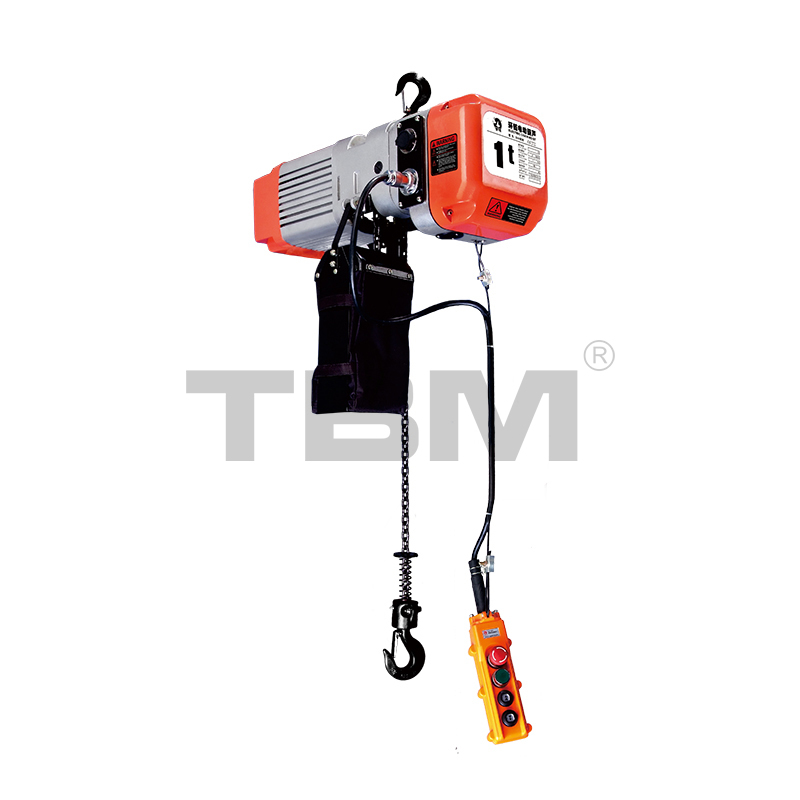 Custom SHH-A Electric Chain Hoist Manufacturers, SuppliersAs China SHH-A Electric Chain Hoist suppliers and SHH-A Electric Chain Hoist manufacturers, Zhejiang Shuangniao Lifting Equipment Co., Lt...View Product →
Environment and chain protection
Corrosion is the second major factor in chain life. In humid coastal plants, surface rust and pitting concentrate stress in the bending zones of each link. Marine and offshore work demands a hoist where the load chain, covers, and electrical components are protected against salt-laden air. The ZH series marine electric chain hoist is one example of a machine designed for exactly those conditions.
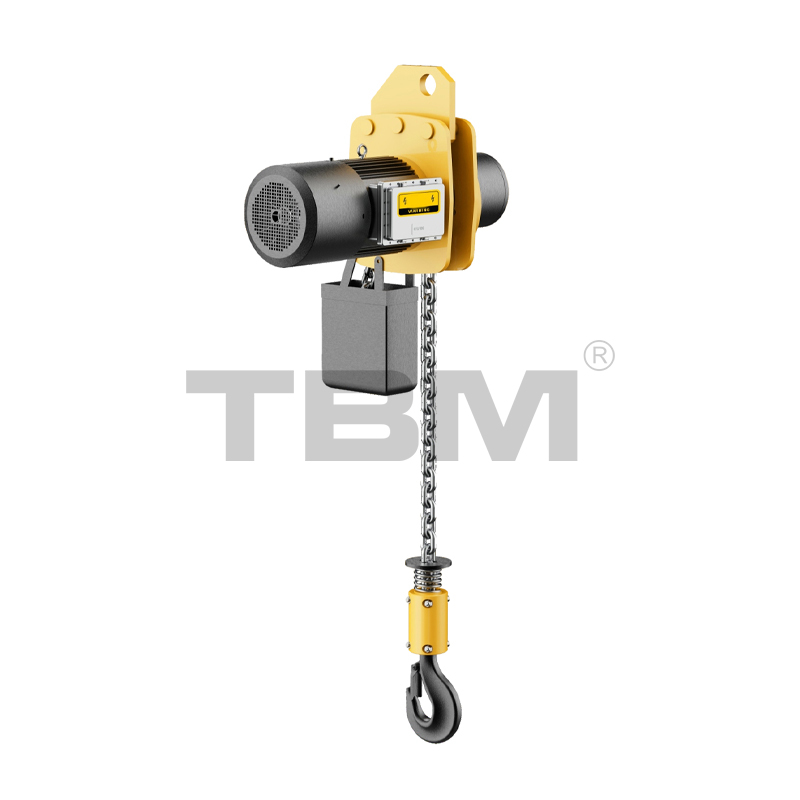 Wholesale Galvanized Electric Hoist Suppliers, FactoryAs China marine electric hoist suppliers and galvanized electric hoist factory, Shuangniao Lifting Equipment offers wholesale marine elec...View Product →
Where the hoist is fixed in a single position, such as a work cell or loading station, the choice is simpler: a fixed-type chain hoist avoids the added weight of a trolley and keeps the chain aligned for a straight vertical lift, which also extends chain life.
Inspecting Your Hoist Chain: What to Measure and When to Replace
A load chain does not fail without warning. It fails after months of progressive wear, and that wear is measurable long before the chain is in danger of breaking. A good inspection program needs only two key measurements: chain elongation and link diameter reduction. If you are not sure which thresholds apply to your hoist, follow the manufacturer's manual and track lifting industry news for updates on standards in your region.
Chain elongation
Every chain stretches slightly under normal load. Elongation is measured across a defined number of links, typically five, using a locking caliper or chain gauge. When the measured length exceeds the original by roughly 2 to 3 percent, the chain no longer engages the chain wheel correctly. At that point, the link pitch has grown enough to cause jumping, binding, and accelerated sprocket wear. The chain must be replaced.
Link diameter and surface condition
Link diameter decreases as the chain rubs against the sheave and against adjacent links. A reduction of 5 percent or more in link diameter is a widely used rejection limit. Also check for visible corrosion, pitting, nicked or cracked welds, and marks that indicate the chain has been struck or dragged across a sharp edge. Any of these is a valid reason to replace the chain immediately.
| Inspection point | Rejection threshold | Reason for rejection |
|---|---|---|
| Elongation over 5 links | 2 to 3 percent stretch | Chain no longer matches the chain wheel; risk of jumping off |
| Link diameter reduction | 5 percent or more | Reduced cross-section lowers breaking load below the safe level |
| Corrosion and pitting | Visible rust, pitting, or flaking on bearing surfaces | Hardness is lost and fatigue cracks form at the pits |
| Stiff or kinked links | Links that do not flex freely | Local deformation or shock damage that cannot be repaired |
| Cracked welds | Any visible crack | Immediate replacement required; risk of sudden separation |
Practical Mistakes That Shorten Chain Life
Even a correctly specified hoist chain can be ruined by avoidable habits. The most common mistakes, in our experience, are:
- Splicing a new section of chain into an old chain. The different wear states create local load concentrations, and the joining link is almost always where a failure starts.
- Using heavy grease instead of a penetrating chain lubricant. Grease collects grit and turns the chain into a grinding belt.
- Saving money on a lower chain grade. It is a poor trade when the chain is the only component between a suspended load and the floor.
- Applying shock loads. A load that falls and is stopped suddenly can impose several times the rated force on the top links, permanently stretching them even when nothing appears damaged.
If a fixed installation is what you need and budget matters, choosing a hoist built for that role is a more sensible economy than downgrading the chain. The TC electric chain hoist provides a reliable fixed-type configuration where the chain and sheave are matched from the factory.
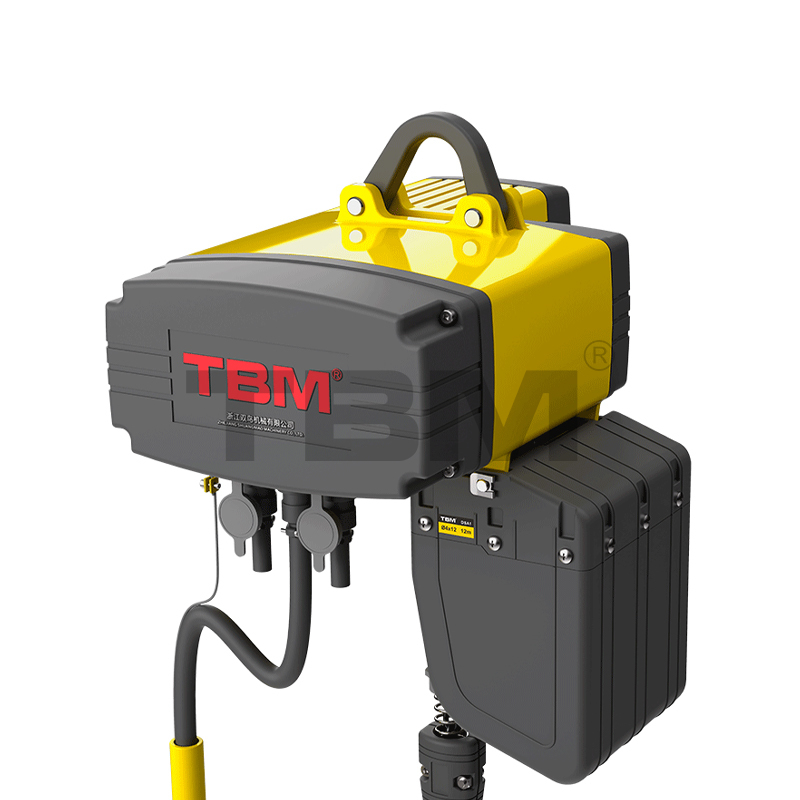 Wholesale TC Electric Chain Hoist Factory, Suppliers - Zhejiang Shuangniao LiftiZhejiang Shuangniao Lifting Equipment Co., Ltd is China wholesale TC Electric Chain Hoist suppliers and factory, details:View Product →
Choose a Hoist Built Around a Reliable Chain
Chain selection is inseparable from hoist selection. Even a premium grade 100 chain wears out quickly if the hoist does not feed it cleanly, guide it without twisting, and protect it from side loading. That is why the chain and the hoist should be treated as one precision system, not as two independent purchases.
In our own range, the load chain is treated as a design component. The pocket sheave, chain guide, and lubrication path are engineered together so that the chain runs true on both the lifting and lowering strokes. Whether you choose an SHH-A general-purpose hoist, a ZH marine unit for corrosive environments, or a TC fixed-type machine for permanent positions, the chain specification is selected for the duty, not left to chance.
If you are unsure how to match a hoist chain to your load, duty cycle, and environment, our engineering and support teams can walk you through the calculation. You can also study documented industrial lifting case studies from installations that use the same equipment, then contact our lifting specialists with your specific load data. That combination of information is far more reliable than guessing from a worn-out nameplate.
News

The company has always attached great importance to new product development and technological innovation, focusing on a high starting point, high configuration
Product Categories
Contact Us

No. 9 Tenglong Road, Huangze Industrial Function Zone, Huangze Town, Shengzhou City, Zhejiang Province, China

info@tbmhoist.com

+86 - 18957539688
