
 English
 中文简体
中文简体
TBM crane
TBM crane
TBM crane
TBM crane
TBM crane
TBM crane
TBM crane
TBM crane
TBM crane
TBM crane
TBM crane
TBM crane
TBM crane

Industry News
 Aug 24 , 2026
What Is a Hoist? Types, Components, and Industrial Selection Guide | TBM Crane
Aug 24 , 2026
Content
What Is a Hoist and What Does It Do?
On a maintenance floor, a 400 kg gearbox has to be lifted from a skid to a repair stand. A fork truck cannot reach the exact position, and lifting it by hand risks a back injury. This is where a hoist earns its place. A hoist is a machine that raises and lowers a load using a drum or lift-wheel around which wire rope or chain wraps. It is the key lifting mechanism in many workshop cranes, gantries, and single-beam systems.
The action is straightforward: the drive rotates the drum or wheel, the rope or chain winds in, and the load moves upward. Reversing the drive lets the load down under control. What separates an industrial hoist from a simple pulley is the braking system, the load-guiding parts, and the ability to repeat the cycle safely throughout a shift.
Core Components of a Hoist
Every hoist, manual or powered, contains the same fundamental elements:
- Lifting medium: wire rope or load chain.
- Drum or lift-wheel on which the lifting medium wraps.
- Load hook with a safety latch.
- Drive mechanism: manual chain wheel, electric motor, or air motor.
- Brake to hold the load and control descent.
- Limit switches for powered hoists.
- Optional trolley for moving along a support beam.
These components determine capacity, travel limits, and safe operation. A hoist built with the right combination of them becomes a reliable production tool; a mismatched hoist becomes a safety risk.
Hoist vs. Crane vs. Winch
The words hoist, crane, and winch are often used as if they mean the same thing, but the equipment has different jobs. A hoist moves a load vertically. A crane adds horizontal travel: it supports a bridge, boom, or column that moves the load across a workspace. A winch pulls rope or cable, often at an angle or across a floor, and is not designed to support a suspended load.
| Device | Primary Action | Typical Configuration | Best For |
|---|---|---|---|
| Hoist | Raises and lowers a load vertically | Standalone, trolley-mounted, or installed inside a crane | Controlled lifting or lowering at one or more fixed points |
| Crane | Raises, lowers, and moves the load horizontally within a defined area | Overhead bridge, gantry, jib, or light crane structure with a hoist and trolley | Covering a bay or work zone with one lifting system |
| Winch | Pulls or reels in a rope or cable, frequently horizontal or inclined | Fixed drum with cable; the load is often dragged rather than suspended | Dragging, pulling, or tensioning loads |
This distinction matters for procurement. A hoist is the lift component; a crane is the structure and motion system that carries it. If you only need to lift and lower at one point, a hoist is enough. If the load must be moved across a bay, the hoist needs to be installed on a crane or trolley.
Main Types of Hoists
Manual Hoists
Manual hoists include lever-operated and chain block types. They are inexpensive, portable, and do not require electrical power. They fit occasional maintenance work, small workshops, and sites where no reliable power supply exists. The trade-offs are slower lifting, more physical effort, and lower productivity on repeated cycles.
Electric Hoists
Electric hoists use a motor to drive the drum or chain wheel. They allow faster lifting, heavier capacities, remote control, and repeatable operation. In manufacturing, warehousing, and planned maintenance, electric hoists are the most common choice because they reduce operator fatigue and improve throughput.
Pneumatic and Air Hoists
Pneumatic hoists are powered by compressed air. They are selected where an electric motor could create a spark hazard, such as in chemical plants or paint shops. They also provide variable speed control. The main infrastructure requirement is a clean and adequate compressed air supply.
Electric Wire Rope vs. Electric Chain Hoists
Within the electric category, the practical choice usually comes down to wire rope or chain. Electric wire rope hoists use a steel rope wound on a drum and suit higher capacities, longer lifting heights, and crane-mounted applications. Electric chain hoists use a calibrated load chain and offer a compact body, easy hook positioning, and often a lower initial cost for point lifts. Both designs can be supplied in standard and low-headroom versions.
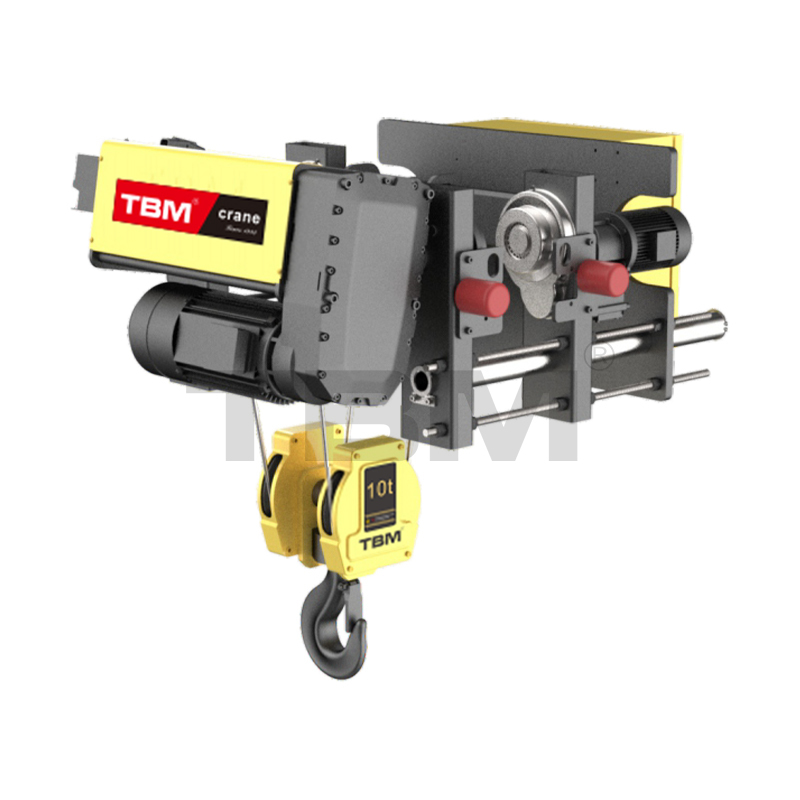 Custom Electric Wire Rope Hoist Manufacturers, SuppliersShuangniao Lifting Equipment is China electric crane hoists manufacturers and electric crane hoists suppliers, we offers custom electric ...View Product →
Where Hoists Are Used
Hoists appear wherever a heavy object must be lifted more than once. Common applications include:
- Machine shops lifting parts, tooling, and maintenance fixtures.
- Assembly lines positioning components onto workstations.
- Warehouses loading and unloading pallets and containers.
- Shipyards and engine rooms handling pumps, motors, and propellers.
- Steel service centers and fabrication shops moving beams and sheets.
- Construction sites raising materials on temporary structures.
Single-point hoists work well for fixed-position lifts. When the need is to cover a rectangular bay, a hoist can be mounted on a trolley or integrated into light crane systems to move the load across a larger footprint.
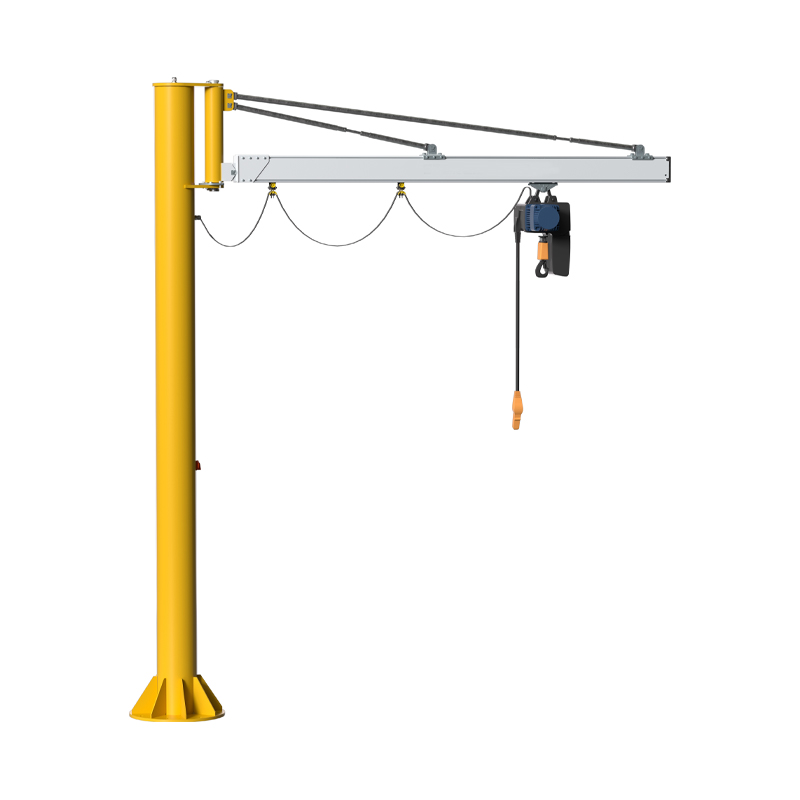 OEM/ODM Light Crane System Factory, ManufacturersZhejiang Shuangniao Lifting Equipment Co., Ltd is Light Crane System manufacturers and Light Crane System factory in China, we offers OEM...View Product →
Seeing equipment in real conditions makes a specification easier to trust. Overhead lifting case studies show how hoists, end carriages, and crane systems are matched to production layouts.
How to Choose the Right Hoist
Choosing a hoist starts with a load inventory, not with comparing list prices. The rated capacity must be higher than the heaviest load, but capacity is not the only factor.
Capacity and Working Class
Capacity is expressed in tonnes or kilograms. For long service life, also consider the working class or duty cycle: how many lifts per hour, how many hours per day, and how much of each cycle runs at full load. A hoist rated for occasional service will overheat or wear quickly if used on a heavy continuous production line.
Lifting Height, Headroom, and Mounting
Lifting height is the distance the hook can travel. Headroom is the distance from the support beam to the hook; low-headroom designs gain useful height in buildings with limited clearance. Mounting styles include lug, hook, and trolley, and each affects how the hoist is supported.
Environment and Power Source
Moisture, dust, salt air, and explosive vapors all change the specification. The enclosure rating, materials, and motor type matter as much as the load capacity. Marine-duty and energy-saving electric chain hoists are examples of environment-specific designs.
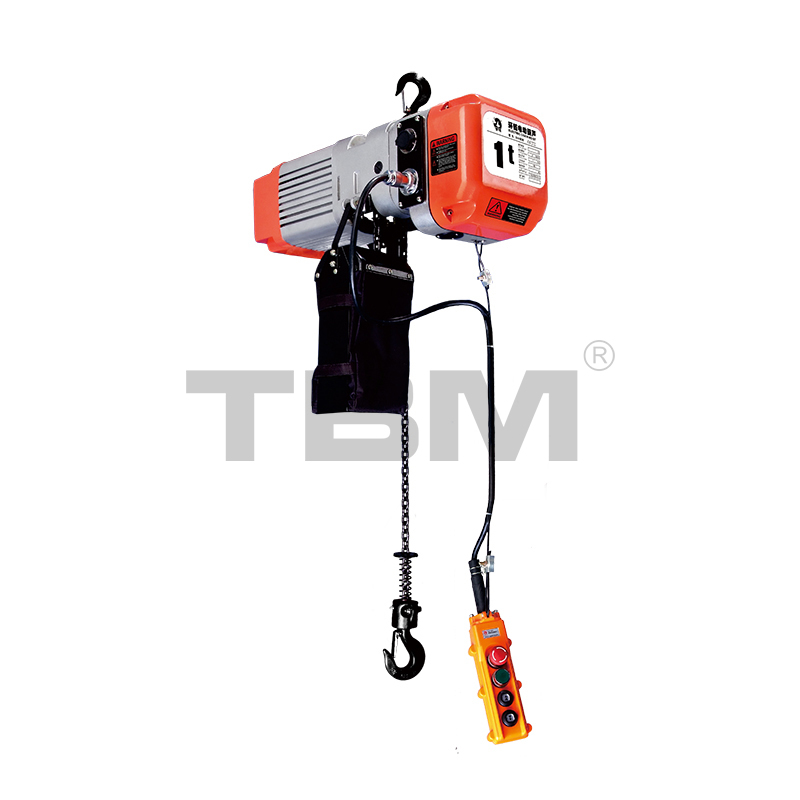 Custom Electric Crane Hoists Manufacturers, SuppliersShuangniao Lifting Equipment is China chain hoist manufacturers and electric chain hoist suppliers, we offers custom electric chain hoist...View Product →
After the technical limits are defined, service support matters. A hoist is a long-term investment, so inspection parts and spares need to be available. To define the right package, contact our engineering team before purchase, especially when replacing an existing unit or building a new system.
Safety, Inspection, and Maintenance
Whatever the type, a hoist is only as safe as the inspection culture around it. The most common failures are caused by overload, a worn lifting medium, a failed brake, or a missing limit switch.
- Check wire rope for broken strands, corrosion, and kinks before each shift.
- Inspect load chain for elongation, rust, and damaged links.
- Test the brake with a rated load at the beginning of service.
- Verify limit switches at reduced speed so they do not slam the hook.
- Replace worn hooks, deformed load attachments, and damaged suspension parts.
- Train operators to lift vertically and avoid swinging the load.
Manufacturers publish recommended inspection intervals and spare-parts lists. Staying current with hoist safety and industry updates helps maintenance teams catch problems before they stop production.
Match the Hoist to the Real Working Cycle
Understanding what a hoist is, and what separates it from a crane or winch, leads to a safer and more reliable material handling decision. The goal is not to buy the largest device; it is to match the lifting medium, drive, working class, and support network to the actual load and operating cycle. A properly selected hoist pays for itself through safer lifts, shorter downtime, and lower running costs.
News

The company has always attached great importance to new product development and technological innovation, focusing on a high starting point, high configuration
Product Categories
Contact Us

No. 9 Tenglong Road, Huangze Industrial Function Zone, Huangze Town, Shengzhou City, Zhejiang Province, China

info@tbmhoist.com

+86 - 18957539688
