
 English
 中文简体
中文简体
TBM crane
TBM crane
TBM crane
TBM crane
TBM crane
TBM crane
TBM crane
TBM crane
TBM crane
TBM crane
TBM crane
TBM crane
TBM crane

Industry News
 Oct 12 , 2026
Hoist Safety: Selection, Inspection, Operation, and Maintenance Practices
Oct 12 , 2026
Content
- 1 Match the Hoist to the Load and Duty Cycle
- 2 Pre-Use Inspection: The Ten-Minute Habit That Prevents Most Failures
- 3 Operating Rules That Keep a Hoist in Its Safe Zone
- 4 Scheduled Inspections, Load Testing, and Maintenance
- 5 Frequent Hoist Hazards and Their Prevention
- 6 Special Environments and Low-Headroom Installations
In a metal fabrication plant, a worker moved a pallet sideways with the pendant while the hoist was still loaded. The load swung, the wire rope wound off at an angle, and before the operator could release the limit switch, the hook block had jammed against the drum housing. A toolbox on the pallet slid off and fell two metres onto a concrete floor. No one was seriously hurt, but the incident was classified as a near miss. The root cause was not the hoist itself; it was the combination of an ill-suited application and an unsafe operating habit.
Hoist safety is easier to control than most operators think. The majority of failures come from a small set of preventable causes: incorrect hoist selection, missing pre-use checks, and procedures that allow side pulling or overloading. This guide explains the practical decisions and routines that keep wire rope hoists, chain hoists, and light crane systems safe in daily industrial use. It also shows where your supplier's product range can make compliance easier. You can review common hoist types as a starting point.
Match the Hoist to the Load and Duty Cycle
The first safety decision is made before the hoist is installed. A hoist that is too small, too slow, or unsuited to the building layout will create hazards every time it runs. Rated capacity alone is not enough. You also need to check lifting height, headroom, and the hoist's operating group.
Wire rope hoists are rated by load, lifting height, and working class. If the motor and gearbox are selected for a light duty cycle but the application runs continuously, the brake and thermal protections will run near their limits. For double-girder cranes, a double-reeled hoist keeps the load centred and reduces the fleet angle on the rope. Low-headroom models are used when the building clearance does not allow a standard hook path.
The table below summarises the selection factors that have the greatest effect on safe operation.
| Factor | What to Verify | Safety Impact |
|---|---|---|
| Rated load | Maximum hook load under normal operating conditions | Overload causes brake slip, rope damage, and hook deformation |
| Lifting height | At least two or three full wraps of rope remain on the drum at the lowest point | Prevents rope pull-out and uncontrolled load drop |
| Headroom | Distance from crane beam to the hook when the block is fully raised | Low headroom avoids hook block impacts and increases usable lift |
| Duty group | Machine class such as M4, M5, or M6 matched to hours per day and load spectrum | Correct motor and brake sizing prevents overheating and premature wear |
| Mounting type | Fixed, lug mounted, or trolley with manual or electric travel | Proper mounting prevents uneven loading on the hoist frame |
If your plant needs a standard headroom wire rope hoist with a reliable limit switch system and mechanical overload protection, the SHA7 series covers most conventional lifting jobs. A hoist that is correctly sized for the application is the first layer of protection.
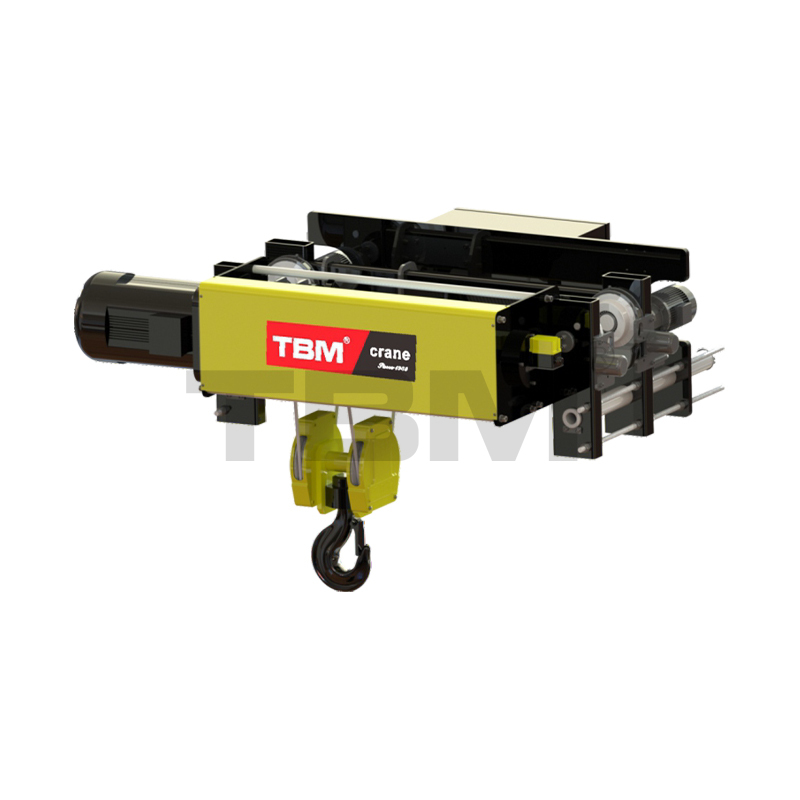 SHA7 Standard Headroom Electric Wire Rope Hoist with Overload ProtectionThis wire rope hoist suits conventional lifting jobs, featuring a reliable limit switch system and mechanical overload protection. It is a practical choice for plants needing a standard headroom unit that can be quickly inspected before each shift to prevent dropped loads.View Product →
Pre-Use Inspection: The Ten-Minute Habit That Prevents Most Failures
Before a hoist is used on a shift, a quick visual check is the most cost-effective safety control. The aim is not to certify the hoist; it is to catch obvious damage that can turn a routine lift into a dropped load.
- Check the wire rope for broken wires, birdcaging, kinks, corrosion, or a noticeable reduction in diameter.
- Inspect the hook for cracks, twisting, or throat opening that has increased more than 15 percent from its original dimensions.
- Run the hoist without a load to confirm the brake holds and the load block moves in both directions.
- Test the upper and lower limit switches. If either switch does not cut power immediately, tag the hoist out of service.
- For chain hoists, look for twisted links, stretched links, or wear at the contact points of the chain and sprocket.
- Examine the pendant, remote control, and power cable for damaged insulation, loose contacts, or exposed wires.
- Make sure the load hook can rotate freely and the safety latch is not jammed.
If you find any of these conditions, remove the hoist from service and report the defect to maintenance. Do not bypass a limit switch or continue using the hoist with a worn rope. The check takes less than ten minutes, and it is the second layer of protection.
Operating Rules That Keep a Hoist in Its Safe Zone
Human error, not mechanical failure, is the leading cause of hoist accidents. Even well-maintained equipment can be forced into an unsafe condition by incorrect operation. The most important rule is simple: position the hoist directly over the load before lifting, and never use the pendant to pull a load sideways.
The following rules address the situations our service engineers see most often in workshops and warehouses.
- Centre the hook over the load's centre of gravity. A side-pull creates angular loading on the drum, which can unseat the rope and damage the hoist frame.
- Use a single command at a time. Rapid reversal of the pendant buttons causes shock loads on the brake and gearbox.
- Never lift more than the rated capacity. If the load weight is unknown, use a load cell or a crane scale first.
- Secure the load so it cannot shift during the lift. Sharp edges on the load can cut slings, and unbalanced loads increase sway.
- Keep the area below the load clear. No one should stand under a suspended load, and the operator should keep the load in sight.
- Do not use a hoist as a tow device. Pulling a skid, a vehicle, or a stuck machine can exceed the hoist's structural limits.
For applications that require frequent picking and placing of lighter loads, electric chain hoists offer smooth starts and precise stop positions, which reduces the tendency for the operator to swing the load. The SHH-A chain hoist, for example, is designed for fixed-position workstations and is manufactured with an electromagnetic brake that stays engaged when the power is off. If your operators are handling components at a welding station or a packing bench, a chain hoist can make the safe path the easy path.
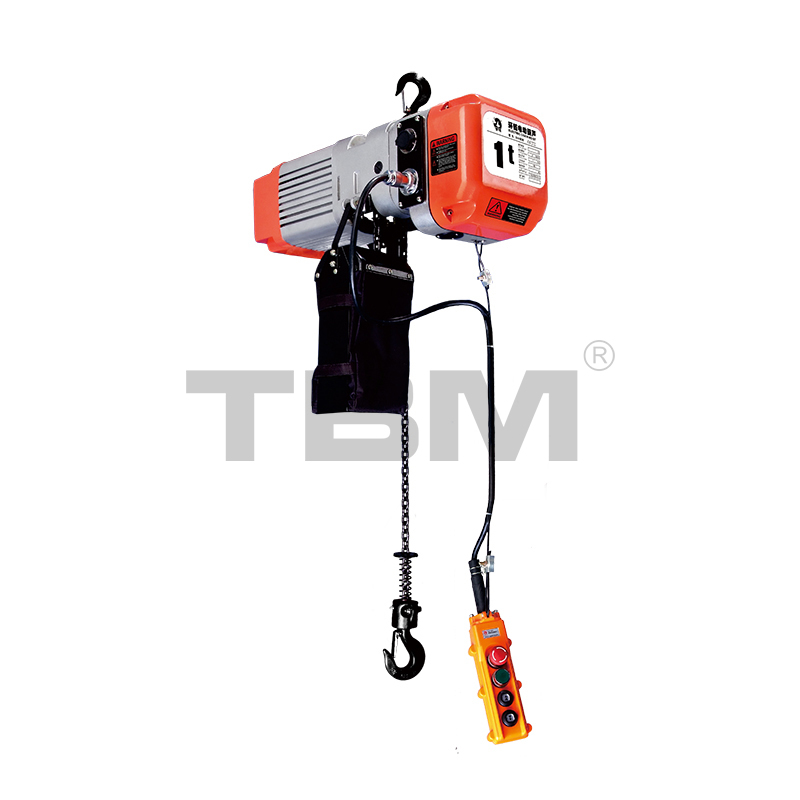 SHH-A Fixed Type Electric Chain Hoist with Electromagnetic BrakeDesigned for fixed-position workstations, this electric chain hoist provides smooth starts and precise stops to reduce load swinging. Its electromagnetic brake stays engaged when power is off, making it a safe option for repetitive lifting tasks at welding stations or packing benches.View Product →
Scheduled Inspections, Load Testing, and Maintenance
A pre-use check catches visible damage, but it will not reveal the progressive degradation of a brake lining or the loss of rope strength after months of service. That is why every hoist needs a scheduled inspection plan based on its duty and risk level.
A common rule from general industry guidance is that cranes and hoists with a capacity above three tons should be load tested to 125 percent of rated capacity every four years. Hoists below that capacity are often tested less frequently, but the actual interval should be set by a qualified engineer based on usage. In many standards, monthly inspections by an appointed person and annual inspections by a competent technician are considered the minimum for frequent-use equipment.
Documentation matters. Record the date, operator name, load tested, measured defects, and corrective actions on a log for each hoist. This creates a trend line and makes it easier to justify early replacement of a worn rope or an ageing brake.
Routine maintenance should include:
- Lubrication of the wire rope or chain according to the manufacturer's schedule;
- Brake adjustment when the stopping distance becomes longer than normal;
- Cleaning and tightening of electrical connections in the control box;
- Inspection of the motor and gearbox for oil leaks and abnormal noise;
- Replacement of worn hooks, rope, chain, and limit switches only with components specified by the hoist manufacturer.
When spare parts are mixed from different brands, the brake torque and limit switch travel can change without a visible clue. Use genuine parts to preserve the original safety margins.
Frequent Hoist Hazards and Their Prevention
The table below lists the hazards that most commonly appear in incident reports across factories, construction sites, and warehouse operations.
| Hazard | Typical Cause | Prevention |
|---|---|---|
| Overloading | Estimated loads are heavier than marked; multiple operators are unaware of the rating | Use a load cell for uncertain loads; display capacity on the hoist body |
| Side pulling | Operator moves the pendant sideways to drag a load | Reposition the hoist trolley; train operators to lift only when centred |
| Limit switch failure | Switches are used repeatedly as the primary stop and are never tested | Test switches daily; use them as back-up, not as the only stop |
| Brake wear | Continuous load lowering or excessive reverse braking | Check stopping distance; replace worn brake parts early |
| Rope or chain damage | Unbalanced loads, wrong fleet angle, moisture and dust | Maintain rope spooling; use a protective cover in dusty environments |
| Personnel under load | No clear walkway; workers standing in the lifting zone | Mark the lifting zone; use a spotter to keep the area clear |
Special Environments and Low-Headroom Installations
Not every facility has the same ceiling height or atmosphere. Low-ceiling workshops, maintenance bays, and temporary shelters often force operators to work with a limited hook path. In this case, a standard hoist may not give enough clearance between the bottom of the crane beam and the top of the load. A low-headroom hoist moves the motor and gearbox beside the drum rather than behind it, reducing the overall height requirement while keeping two or three wraps of rope on the drum.
The same kind of situation applies to marine and offshore work, where salt-laden air attacks standard paint and electrical enclosures. For those applications, a hoist with a sealed electrical system and marine-grade paint has a longer operating life and a lower probability of a sudden electrical fault. If you operate a chain hoist in a marine environment, your supplier should offer a specific marine model rather than a general-purpose one.
Dusty or humidity-controlled environments also benefit from proper sealing. Insulating materials, filters, and breather valves should be considered if the hoist is installed in a foundry, a cement plant, or a food production area with frequent washdowns.
For a facility facing height constraints, the TBM low-headroom wire rope hoist combines the reliability of a wire rope hoist with a compact layout that fits between the beam and the load. It is designed for the same safety features as the standard version, including overload protection and limit switches, but its frame is optimised for a reduced overall height.
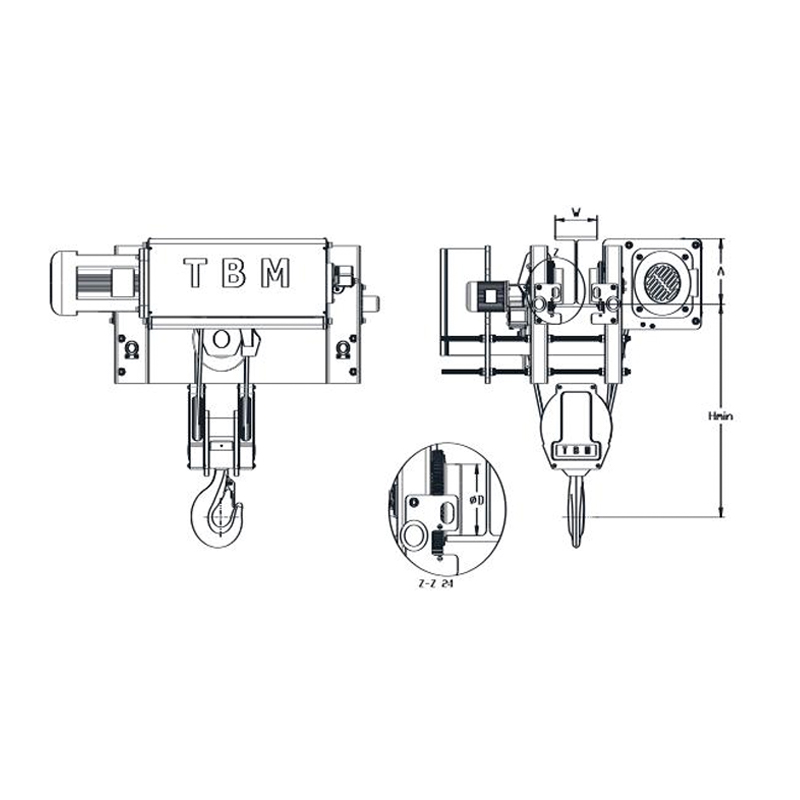 SHA7 Low-Headroom Wire Rope Hoist for Constrained SpacesThis hoist packs wire rope reliability into a compact frame, reducing height requirements in low-headroom environments. It includes overload protection and limit switches, helping you optimize vertical space while performing heavy lifting, assembly, and maintenance operations safely.View Product →
Hoist safety does not have to be complicated. Match the hoist to the application, inspect it before every shift, operate it with the load centred under the hook, and follow a scheduled maintenance plan. Each rule is simple, but together they prevent most of the serious accidents that occur in industrial lifting environments.
If you are selecting a new hoist or reviewing the safety of an existing installation, a practical first step is to compare the requirements of your application with the specifications of a few hoist models. You can also contact our technical team for help with load capacity, headroom, and duty class decisions. Investing a few hours in planning a safe lifting setup costs less than one unplanned event.
News

The company has always attached great importance to new product development and technological innovation, focusing on a high starting point, high configuration
Product Categories
Contact Us

No. 9 Tenglong Road, Huangze Industrial Function Zone, Huangze Town, Shengzhou City, Zhejiang Province, China

info@tbmhoist.com

+86 - 18957539688
