
 English
 中文简体
中文简体
TBM crane
TBM crane
TBM crane
TBM crane
TBM crane
TBM crane
TBM crane
TBM crane
TBM crane
TBM crane
TBM crane
TBM crane
TBM crane

Industry News
 Oct 05 , 2026
Motorised Chain Hoist Guide: Types, Working Principle & Selection Tips | TBM Crane
Oct 05 , 2026
Content
When a motorised chain hoist stops under load, the problem is rarely the motor itself. It is almost always a mismatch between the selected hoist and the real working conditions. The most frequent selection error we see in the lifting industry is choosing a chain hoist based only on rated capacity, while ignoring duty cycle, lifting speed, and headroom. The right motorised chain hoist is a combination of safe capacity, adequate duty rating, and a speed class that matches the task.
What Is a Motorised Chain Hoist?
A motorised chain hoist is an electrically powered lifting device that uses a chain as the load-bearing element. It consists of an electric motor, a gearbox, a brake, a load chain, and a chain sprocket housed in a compact body. Unlike manual chain blocks, which need an operator to pull the hand chain, a motorised chain hoist raises and lowers loads with the press of a button on a pendant control or remote.
The main function of the motorised chain hoist is to lift, lower, and position heavy loads with repeated precision. It is used in workshop crane systems, monorail tracks, jib cranes, and fixed-beam installations where manual lifting is impractical or unsafe.
How a Motorised Chain Hoist Works
Understanding the working principle helps you see why certain specifications matter. The operating cycle is straightforward, and each component has a specific role.
The Motor
The motor generates the rotational power needed to lift the load. For a single-phase or three-phase motor, the input drives the primary shaft of the gearbox. The motor's power rating and speed determine the hoist's lifting capacity and speed.
The Gearbox
The gearbox reduces the high-speed motor rotation to a lower, more powerful output speed. The reduction ratio is what allows a relatively small motor to lift a heavy load. Different gear ratios produce different lifting speeds, which is why two hoists with the same capacity may have different lifting times.
The Brake
An electromagnetic or spring-loaded brake stops the load when power is removed. This is a safety-critical component. When the pendant button is released, the brake engages automatically and holds the load in position. In a well-designed motorised chain hoist, the brake is set on the back shaft of the motor, so even a mechanical failure in the gearbox does not cause an uncontrolled drop.
The Chain Sprocket and Load Chain
The sprocket engages with the chain and translates the gearbox output into vertical lifting motion. The chain itself is an alloy steel link chain, typically calibrated to match the sprocket. The chain's tensile strength and the sprocket's tooth profile work together to determine the safe working load.
Limit Switches
Upper and lower limit switches protect the hoist from over-travel. When the hook block reaches the limit, the switch cuts power to the motor. This prevents the chain from running out of the sprocket or the hook from hitting the housing.
Key Specifications to Compare Before You Buy
When you compare motorised chain hoists, focus on the specifications that affect on-site performance, not just the price label. The table below lists the most important parameters and why they matter.
| Parameter | What It Means | Why It Matters |
|---|---|---|
| Rated capacity | The maximum load the hoist is designed to lift at a given chain fall | Never exceed it. Overload is the primary cause of chain and brake failure. |
| Lifting speed | The vertical speed at which the hook travels | A lifting speed of 8 m/min is faster than 3 m/min. Higher speed improves productivity but may require a larger motor or more control. |
| Duty rating | The amount of time the hoist can operate in a given hour or cycle | Continuous-duty hoists handle production lines. Light-duty hoists are for occasional maintenance work. |
| Headroom | The distance from the beam to the hook in the raised position | Low headroom models help when the ceiling is low or the crane run is tight. |
| Voltage and phase | The electrical power requirement | Choose 230 V single phase or 400 V three phase depending on your facility. Three phase is typical for industrial installations. |
| Protection rating | The IP rating of the hoist body | IP54 or higher protects against dust and splash water. Marine applications require more corrosion protection. |
Duty Cycle and Starting Frequency
The duty rating is the specification that buyers misunderstand most often. A hoist that runs 10 minutes out of a 60-minute period has a 16.7% duty cycle, which is fine for occasional use. The same hoist running 30 minutes out of 60 has a 50% duty cycle and needs a more robust motor and cooling design. If your operation runs a hoist on an assembly line, you need a high duty rating to avoid overheating and premature brake wear.
Capacity Is Not the Full Story
Two hoists with the same rated capacity can behave very differently under actual operational conditions. One may have a faster lifting speed and a higher duty cycle, while the other has a lower performance ceiling. Matching the hoist to the job means looking at the full set of operating parameters, not just the nameplate.
Common Types of Motorised Chain Hoists
Different work environments call for specific hoist configurations. The following types cover the most common needs in industrial settings.
Standard Type
A standard motorised chain hoist is suitable for typical workshop and warehouse environments. It is mounted on a monorail or a single girder crane and provides reliable lifting for general material handling. The SHH-A series is a good example of this configuration, offering a balance of lifting capacity, speed, and durability for everyday applications.
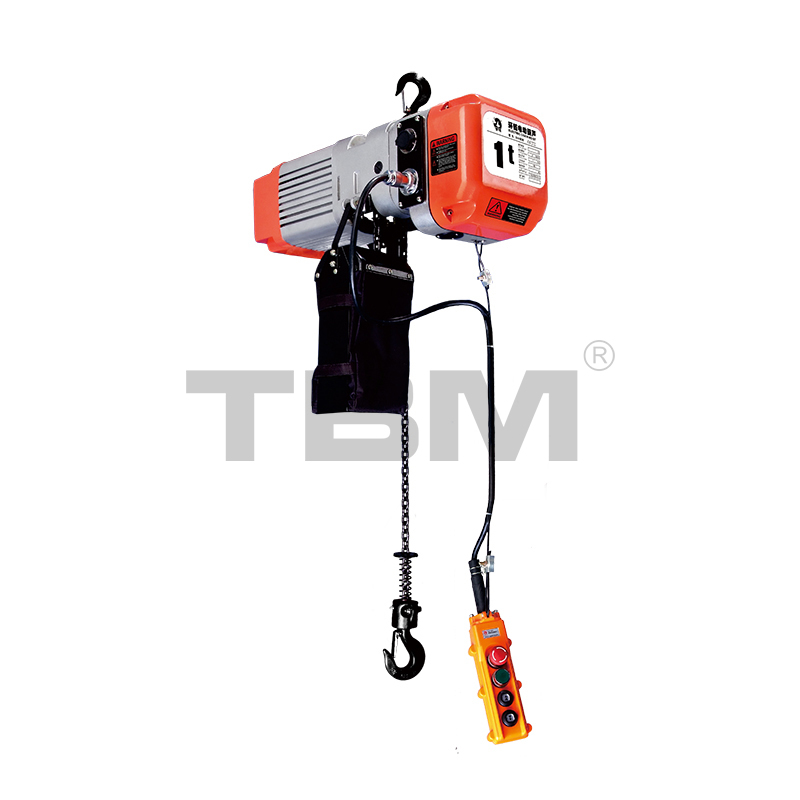 SHH-A Fixed Type Electric Chain Hoist for Stationary LiftingThe SHH-A fixed type is designed for stationary installations, providing the same lifting mechanism as the standard model but without a trolley. Ideal for dedicated vertical lifting positions.View Product →
Fixed Type
Fixed-type motorised chain hoists are mounted directly to a beam or bracket without a trolley. They are used for fixed workstations where the load moves vertically over a dedicated position. The SHH-A fixed type offers the same lifting mechanism as the standard model, but the mounting setup is intended for stationary installations.
Marine and Corrosion-Resistant Type
Marine environments require a hoist that resists saltwater and high humidity. The ZH type marine electric chain hoist is specifically designed for shipbuilding and offshore applications, with corrosion-resistant surfaces and sealed electrical components.
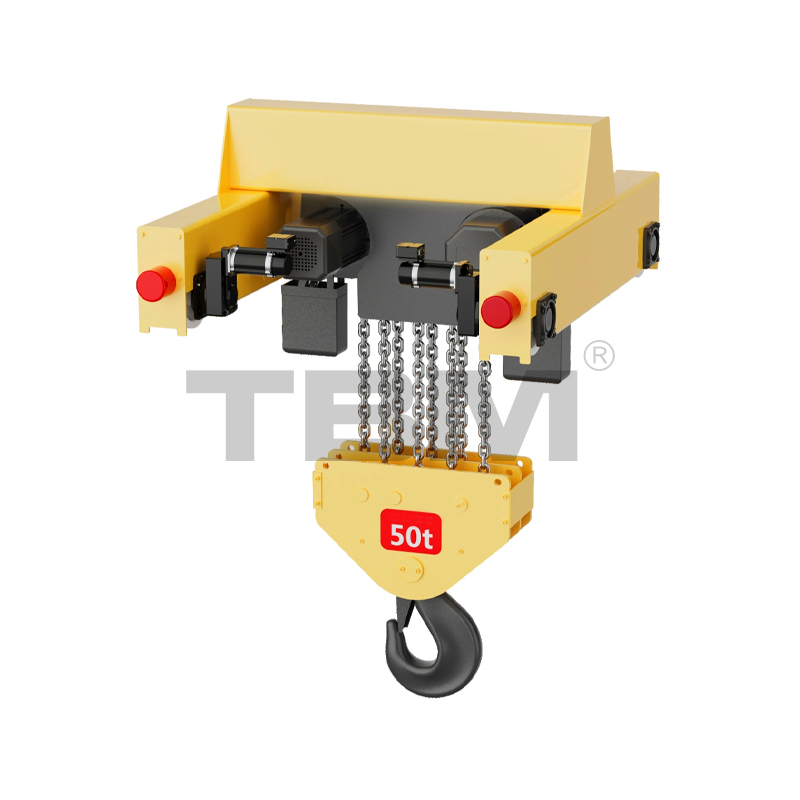 ZH Type Energy-Saving and Marine Electric Chain HoistThe ZH series combines energy-saving efficiency with marine-grade corrosion resistance, making it suitable for continuous operations and harsh offshore environments.View Product →
Energy-Saving Type
For operations that run continuously and are sensitive to energy costs, an energy-saving motorised chain hoist reduces power consumption while maintaining lifting performance. The ZH energy-saving series is an example of this approach.
Versatile Trolley-Mounted Type
The TC electric chain hoist provides a compact design that can be fitted with a manual or electric trolley, making it suitable for applications where the hoist needs to travel along the beam in addition to lifting.
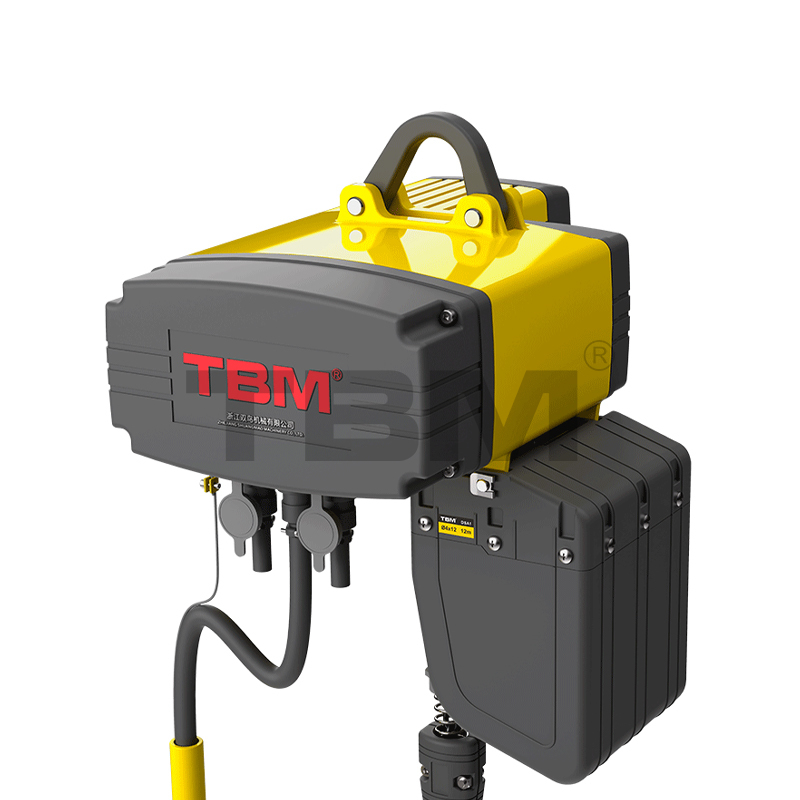 TC Electric Chain Hoist with Trolley OptionsThe TC electric chain hoist offers a compact design that can be paired with manual or electric trolleys, enabling both lifting and horizontal travel along a beam.View Product →
Installation and Usage Considerations
The best motorised chain hoist will underperform if it is installed or used incorrectly. Consider the following points before and after installation.
- Matching the beam size to the trolley flange: A misaligned trolley causes excessive wear on the wheel and rail.
- Ensure adequate headroom for the selected model. A standard headroom hoist on a low-ceiling beam can reduce effective hook travel.
- Set the limit switches correctly after installation. Improperly adjusted limit switches are a common cause of chain and motor damage.
- Lubricate the chain according to the manufacturer's schedule. A dry chain accelerates sprocket wear.
- Check the brake every six months for consistent stopping performance.
For applications that require regular reporting and traceability, a hoist control box can be integrated with the brake and motor to provide more reliable operation. The control components should match the hoist's voltage and safety standards.
Selecting a Motorised Chain Hoist: A Practical Decision Framework
The right motorised chain hoist depends on three factors: the maximum load and its frequency, the lifting speed your process needs, and the environment where the hoist will operate. Once these are defined, you can narrow down the type and duty rating. TBM Crane offers a range of motorised chain hoists, including the SHH-A standard type, the TC compact type, and the ZH marine and energy-saving types, so the matching process can be supported with direct product comparisons. For project-specific requirements, our engineering team can review your lifting parameters and recommend the correct model.
For examples of how motorised chain hoists are applied in real installations, you can view our case studies on the website. If you are ready to discuss a specific hoist for your facility, contact our technical sales team directly using the contact page.
News

The company has always attached great importance to new product development and technological innovation, focusing on a high starting point, high configuration
Product Categories
Contact Us

No. 9 Tenglong Road, Huangze Industrial Function Zone, Huangze Town, Shengzhou City, Zhejiang Province, China

info@tbmhoist.com

+86 - 18957539688
