
 English
 中文简体
中文简体
TBM crane
TBM crane
TBM crane
TBM crane
TBM crane
TBM crane
TBM crane
TBM crane
TBM crane
TBM crane
TBM crane
TBM crane
TBM crane

Industry News
 Aug 31 , 2026
How Does a Chain Hoist Work? Manual and Electric Hoist Mechanics Explained
Aug 31 , 2026
Content
A maintenance team in a bottling plant faces the same problem every shift: a 350 kg pump motor needs to be lifted out of a frame, moved two metres, and lowered onto a service cart. Doing it manually is unsafe. A forklift is too large. A chain hoist on a simple I-beam trolley solves it in seconds. The reason it works so well comes down to how the hoist is built. A chain hoist multiplies the force you apply, whether that force comes from a human pulling a hand chain or from an electric motor, and delivers it to the load through a calibrated load chain. Understanding this mechanism matters whether you are an operator, a maintenance manager, or a buyer comparing equipment for a new workshop.
The Core Principle: Mechanical Advantage
The short answer to "how does a chain hoist work" is that it uses mechanical advantage. Instead of lifting a load directly, a chain hoist converts a low-force input over a long distance into a high-force output over a short distance. This is the same principle behind a gearbox or a lever, but arranged in a compact, self-contained unit that hangs above the work area.
In a manual chain hoist, the operator pulls an endless hand chain. That chain turns a small hand chain wheel. The wheel is connected through a train of reduction gears to a larger load sprocket. The gears increase the torque while reducing the number of rotations. As a result, pulling several metres of hand chain raises the load hook by only a few centimetres, but the force applied to the load is many times greater than the force the operator exerts.
Electric chain hoists use the same gear-reduction concept. The hand chain wheel is replaced by an electric motor that drives the same gear train. The motor can produce high torque at a controlled speed, and the gearbox further multiplies that torque so a relatively small motor can lift several tonnes.
Main Components of a Chain Hoist
Every chain hoist, manual or electric, shares the same core hardware. Knowing what each part does makes it easier to diagnose problems, compare specifications, and explain failures to a service technician.
| Component | Function |
|---|---|
| Load chain | The calibrated chain that wraps around the load sprocket and raises or lowers the hook. |
| Chain sprocket / wheel | Drives the load chain; the teeth match the link pitch of the calibrated chain. |
| Gear train | Multiplies input torque and reduces speed between the input wheel and the load sprocket. |
| Load brake | Holds the load automatically when input stops, preventing the load from running away. |
| Hooks | Top hook anchors the hoist to the suspension; bottom hook carries the load. |
| Suspension | Lug, hook, rigid trolley, or motorized trolley that supports the hoist and allows travel. |
| Limit switches (electric) | Stop the motor at safe upper and lower hook positions. |
The load brake deserves special attention. In most chain hoists, the brake engages automatically when the input stops. If you stop pulling the hand chain with a load suspended, the load stays exactly where it is instead of slipping back. In an electric hoist, there is usually both an electromagnetic motor brake for stopping and a mechanical load brake that holds the load even if the motor brake fails. This redundancy is one of the reasons chain hoists are rated for industrial use.
How a Manual Chain Hoist Works
Manual chain hoists, also known as chain blocks or hand chain hoists, are the simplest form. The operator pulls the hand chain with a smooth, steady stroke. Here is the operating sequence:
- The hand chain moves over the hand chain wheel, rotating it as the operator pulls.
- The hand chain wheel drives the input shaft of the gear train.
- The reduction gears multiply the torque and reduce the speed at the output shaft.
- The output shaft rotates the load sprocket, which engages the load chain.
- The load chain moves through the hoist body, lifting or lowering the bottom hook and the attached load.
- When the operator stops pulling, the load brake immediately holds the load in position. The brake releases automatically when the operator pulls in the lowering direction, so no separate release lever is needed.
This design has two practical consequences. First, it takes a modest amount of physical effort to lift a heavy load, which is why a single operator can handle a multi-tonne hoist. Second, the operator controls the exact position of the load because the brake holds it securely the moment pulling stops. This makes manual chain hoists well suited for precise positioning work in maintenance and assembly applications, especially where no power supply is available.
How an Electric Chain Hoist Works
An electric chain hoist replaces the hand chain with an electric motor, but the load-side mechanism remains the same. When the operator presses the "up" button on the pendant, the motor starts and drives the gearbox. The gearbox output turns the load sprocket, which moves the load chain in the lifting direction. Pressing "down" reverses the motor direction and lowers the hook.
The critical components in an electric model are the motor, the brake, and the control system. The motor is designed for intermittent duty, which means it can run for a limited time and then needs to rest. The electromagnetic brake holds the load when the motor stops, and a mechanical load brake provides a second layer of safety. Limit switches cut power automatically when the hook reaches the upper or lower travel limit, preventing the hook from jamming into the hoist body or the chain from paying out completely.
Most electric chain hoists are supplied with a pendant control and a chain guide that feeds the slack load chain into a chain container. Because the motor does the work, the operator only presses buttons and guides the load. This reduces physical strain and speeds up repetitive lifting cycles compared to a manual hoist.
Manufacturers such as TBM Crane produce electric chain hoists in this format, and the SHH-A electric chain hoist is a typical example of a compact motor-driven unit for general industrial duty.
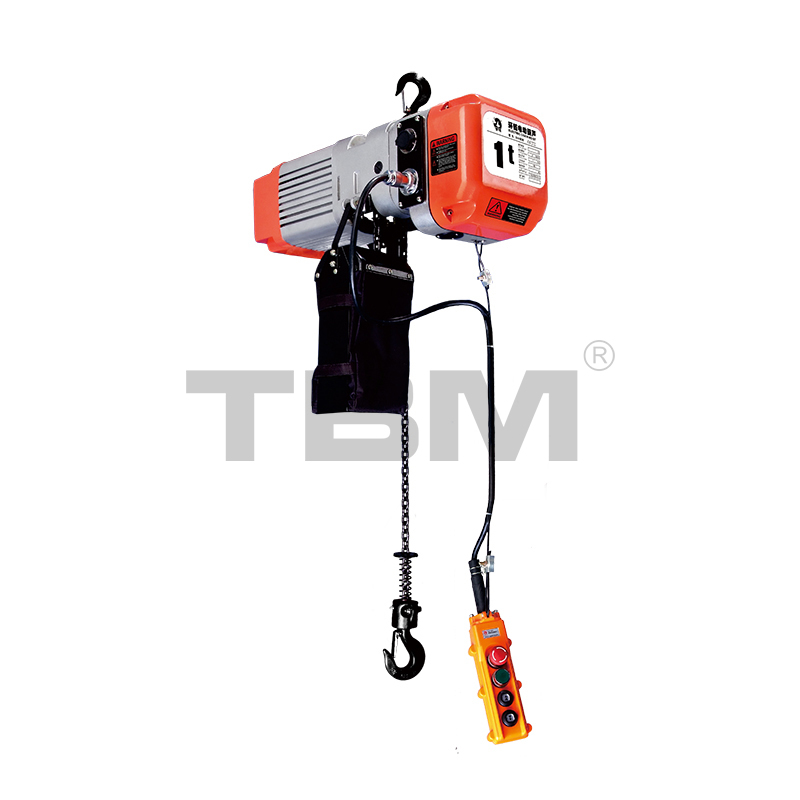 Custom SHH-A Electric Chain Hoist Manufacturers, SuppliersAs China SHH-A Electric Chain Hoist suppliers and SHH-A Electric Chain Hoist manufacturers, Zhejiang Shuangniao Lifting Equipment Co., Lt...View Product →
Chain Hoist vs Wire Rope Hoist
If you are shopping for lifting equipment, you will also come across wire rope hoists. They work on the same basic principle of a motor (or hand chain) driving a gear train, but instead of a load chain they use a steel wire rope wound around a drum.
Chain hoists have some advantages: they are more compact, they can be hung from a hook or trolley in tight spaces, and the load chain is simpler to replace when it wears. They also handle shorter lift heights efficiently and tend to cost less than wire rope hoists of the same capacity.
Wire rope hoists are generally preferred for longer lift heights, higher travel speeds, and heavy continuous duty. The wire rope has a smaller diameter for a given capacity, which means the hoist can have a more compact drum for very high lifts. Wire rope also spools evenly on the drum, giving smoother operation in crane applications.
If your application involves frequent high lifts or high-speed travel, a wire rope hoist may be the better fit. For general workshop maintenance, assembly, and short vertical lifts, a chain hoist is usually simpler and more economical. Many manufacturers build both types; TBM Crane's SHA7 electric wire rope hoist, for example, covers standard-headroom, low-headroom, and double-girder configurations under one series.
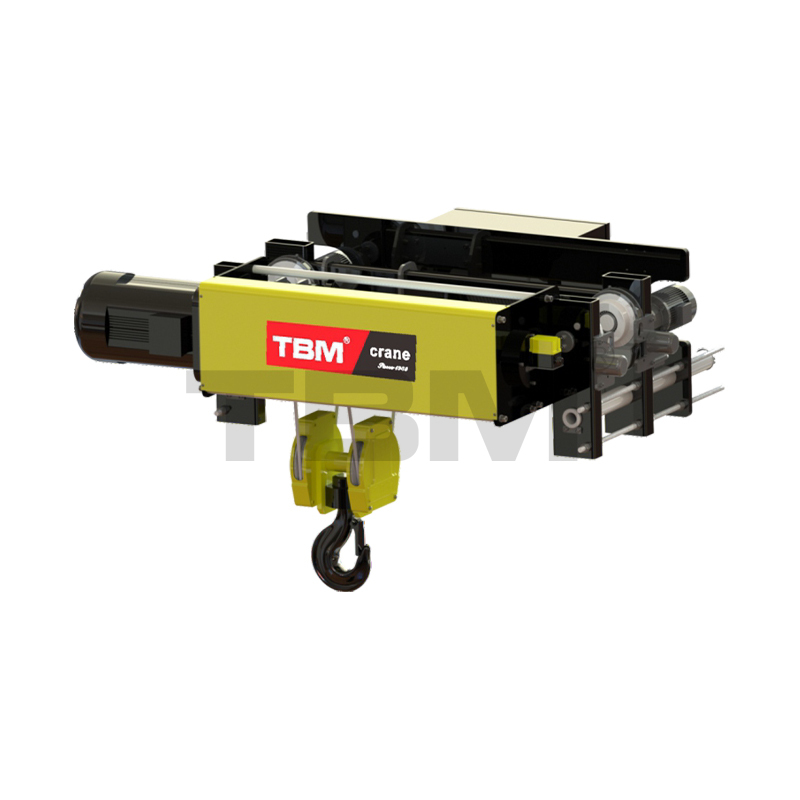 Custom SHA7 Electric Wire Rope Hoist Manufacturers, SuppliersAs China SHA7 Electric Wire Rope Hoist suppliers and SHA7 Electric Wire Rope Hoist manufacturers, Zhejiang Shuangniao Lifting Equipment C...View Product →
What to Check Before Buying a Chain Hoist
Choosing the right chain hoist comes down to matching the machine to the job. The most common mistake is buying on capacity alone. The following checks will help you avoid the pitfalls that lead to early failure or unsafe operation.
| Specification | Why it matters | Typical range |
|---|---|---|
| Rated capacity | Must exceed the heaviest load you actually lift. | 0.5 t to 20 t for electric chain hoists |
| Lift height | Distance from the bottom hook at its highest position to the floor level where you pick up the load. | 3 m to 30 m depending on model |
| Headroom | Distance from the rail or mounting point to the bottom hook at the highest position; critical in low buildings. | Low-headroom models reduce this dimension |
| Duty cycle | How long the motor can run before it needs to cool down; frequent lifts require a higher duty rating. | M3 to M5 for typical workshop duty |
| Suspension type | Fixed lug, hook, plain trolley, or motorized trolley determines how the hoist mounts and travels. | Hook and trolley are the most common |
| Power supply | Voltage and phase must match your facility; three-phase is normal for industrial electric chain hoists. | 230 V or 400 V, 50/60 Hz |
| Operating environment | Dust, humidity, temperature, and salt air affect motor protection, sealing, and materials. | IP55 or higher for dusty or wet areas |
For applications with continuous or semi-continuous operation, pay attention to the energy-saving electric chain hoist, which is designed with a more efficient motor drive to reduce power consumption during frequent cycles. Marine-rated versions add corrosion protection for shipboard use.
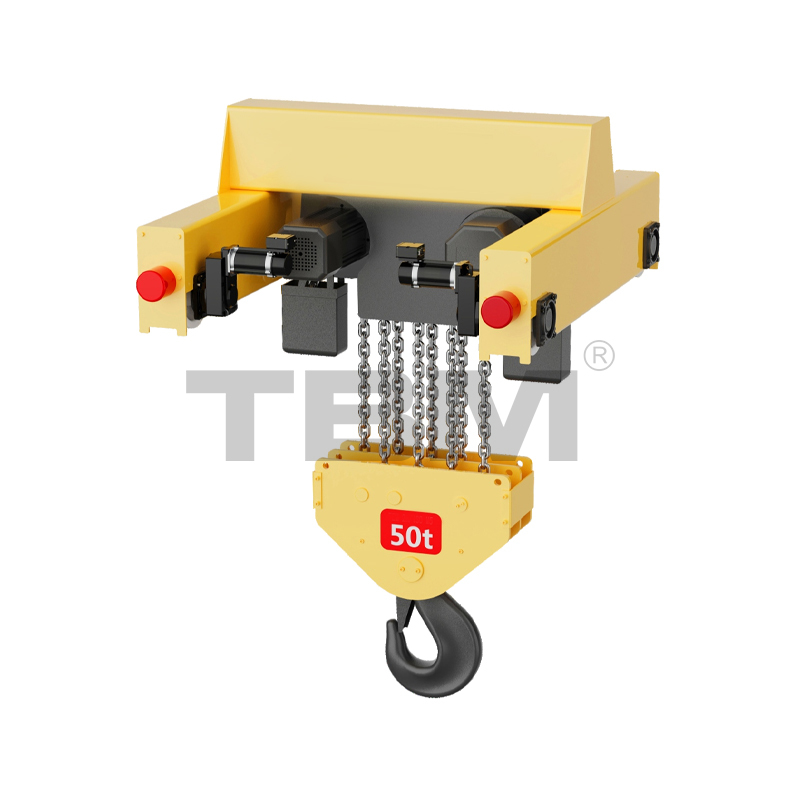 Wholesale ZH Type Energy-Saving Electric Chain Hoist Factory, Suppliers - ZhejiaZhejiang Shuangniao Lifting Equipment Co., Ltd is China wholesale ZH Type Energy-Saving Electric Chain Hoist suppliers and factory, detai...View Product →
It is also worth considering the full system. A chain hoist is only one part of a lifting installation. The rail, trolley, end stops, and power supply all need to work together. If you are planning a new installation, it helps to deal with a supplier that can support the complete arrangement, not just supply the hoist. You can browse the full range of electric chain hoists, wire rope hoists, and crane components or contact TBM Crane directly for application guidance.
Safety and Maintenance Basics
Knowing how a chain hoist works also means knowing what can go wrong. Most chain hoist accidents come from predictable causes: overloading, side loading, worn chain, or a failed brake.
- Never exceed the rated capacity stamped on the hoist body. An overloaded hoist may not fail immediately, but the brake, gear train, and chain accumulate damage.
- Inspect the load chain regularly. Look for stretched links, cracks, corrosion, or unusual wear on the link surfaces where they contact the sprocket.
- Test the brake under load at the start of each shift in heavy-duty use. Raise a test load a few centimetres and confirm it holds.
- Avoid side loading. The load chain should run vertically in both directions. Pulling at an angle stresses the sprocket and can jump the chain off the guide.
- Keep the chain lubricated with the lubricant recommended by the manufacturer. A dry chain wears faster and creates more friction.
- Follow the manufacturer's inspection intervals. Electric hoists also require checking the motor brake, limit switches, and electrical cables.
These checks do not need to be complicated, but they need to be consistent. A hoist that is well maintained and correctly operated will give years of service. A hoist that is abused will fail, and in a lifting application, failure means dropped loads.
A chain hoist works by multiplying input force through a gear train and converting it into vertical movement of a calibrated load chain. The principle is the same whether the input comes from a hand chain or an electric motor, and the load brake is what makes it safe to stop mid-lift. For buyers, the practical takeaway is to specify the hoist against the real working conditions: capacity, lift height, headroom, duty cycle, and the environment. Get those right, and the hoist will be the most reliable piece of equipment in the workshop.
News

The company has always attached great importance to new product development and technological innovation, focusing on a high starting point, high configuration
Product Categories
Contact Us

No. 9 Tenglong Road, Huangze Industrial Function Zone, Huangze Town, Shengzhou City, Zhejiang Province, China

info@tbmhoist.com

+86 - 18957539688
