
 English
 中文简体
中文简体
TBM crane
TBM crane
TBM crane
TBM crane
TBM crane
TBM crane
TBM crane
TBM crane
TBM crane
TBM crane
TBM crane
TBM crane
TBM crane

Industry News
 Sep 28 , 2026
Hoisting Wire Rope: Selection, Inspection, and Safety for Electric Hoists
Sep 28 , 2026
Content
An electric hoist is only as reliable as the wire rope wound onto its drum. In practice, two ropes that look identical can perform very differently depending on their construction, core type, and terminations. Wrapping a load with the wrong lay or an undersized rope will not only shorten the rope’s life but can also damage the hoist’s drum and guide system. The practical first step is to specify the rope’s construction, grade, and end fittings together, not separately.
Rope construction determines hoisting performance
Hoisting wire rope is built from individual wires laid into strands, then wound around a core. The two most common classifications for cranes and hoists are 6x19 and 6x36. The “6” is the number of strands; the second number tells you how many wires are in each strand. In general, 6x19 construction resists abrasion better and is a good choice for normal lifting where the rope sees hard surfaces. A 6x36 construction is more flexible, making it suitable for smaller drum diameters and multi-layer winding.
The core also matters. A fibre core gives a softer, more flexible rope, but an independent wire rope core (IWRC) adds strength and prevents the rope from crushing under heavy loads. For hoists that work with double-girder cranes, crushing resistance is often the deciding factor. When a rope is wound on a drum with a second layer, each turn presses into the layer beneath; a steel core holds its round shape under that pressure far better than a fibre core.
Another performance factor is the rope lay. Right-hand regular lay is the most common for hoisting because it resists twisting when a load is suspended. Choosing a braided or compacted strand rope can also reduce wear on the drum and sheaves, because the compacted surface spreads contact over a larger area.
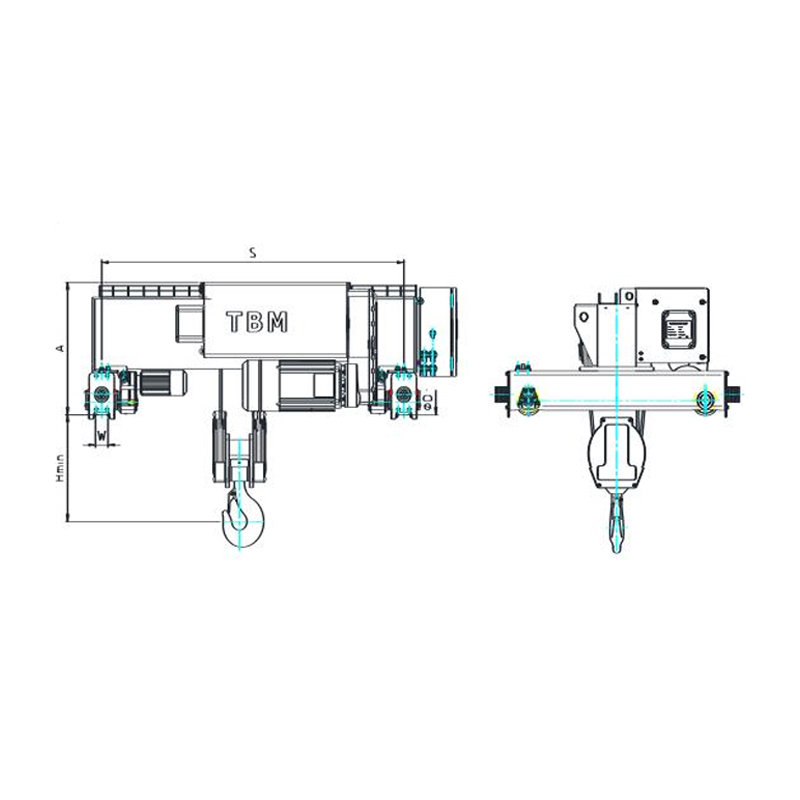 SHA8 Double Girder Electric Wire Rope Hoist with Single ReelDesigned for high-intensity lifting in demanding environments like steel mills and ports, this double girder hoist features a robust single-reel drum and efficient control system to handle heavy loads reliably.View Product →
Choosing the right rope construction for your hoist
Selection starts with the hoist’s duty. A rope that is perfect for a slow-moving workshop crane may fail quickly in a high-cycling production line. Consider the load spectrum, the number of lift cycles per hour, and whether the rope sees shock loads when the load is picked from the floor.
The following table compares three common rope constructions for different hoisting tasks.
| Construction | Core type | Typical use | Trade-off |
|---|---|---|---|
| 6x19 Seale | IWRC | General lifting, abrasive conditions | Good abrasion, less flexible |
| 6x36 Warrington | IWRC | Low-headroom hoists, small drums | Flexible, lower crush resistance |
| 6x25F | Fibre | Light-duty, infrequent lifting | Lower cost, shorter service life |
Where headroom is limited, a low-headroom electric hoist often needs a rope with better bending fatigue characteristics. The SHA7 low-headroom hoist, for example, is designed to minimize the dead distance between the hook and the beam, allowing a more compact drum that still works with a flexible rope.
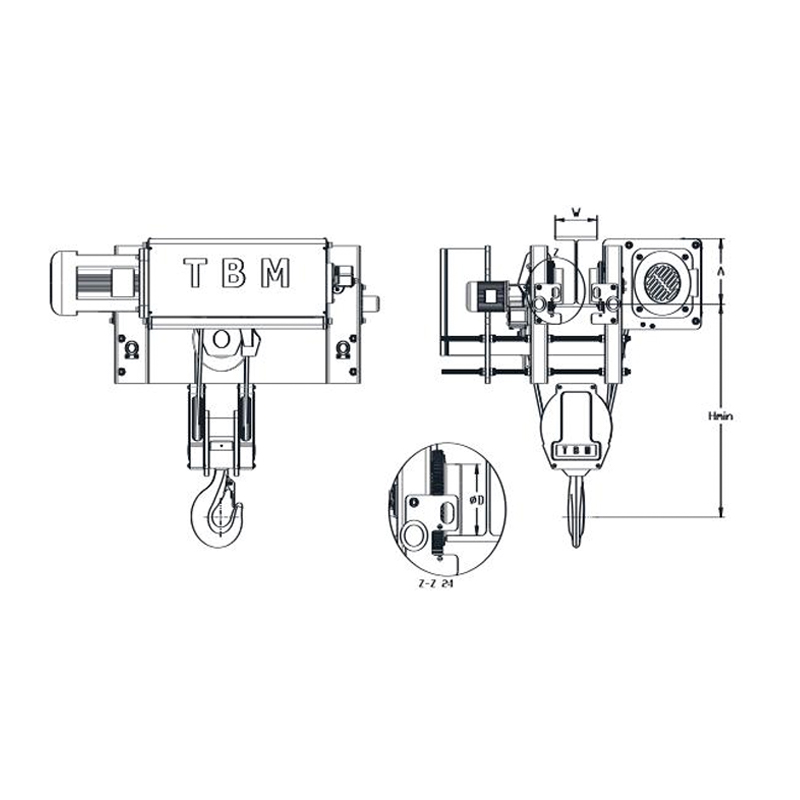 SHA7 Low-headroom Wire Rope Hoist for Confined SpacesIdeal for limited headroom applications, this hoist minimizes dead distance between hook and beam, allowing compact installation while maintaining smooth lifting with a flexible rope.View Product →
Inspection and retirement criteria
The best way to protect your staff and your equipment is to establish a rope inspection routine before anything goes wrong. A basic inspection should cover broken wires, diameter reduction, corrosion, abrasion, kinks, and heat damage.
International standards such as ISO 4309 provide practical retirement thresholds. For a 6x37 class rope with an IWRC, a typical rule is to replace the rope when the number of visible broken wires in one rope lay exceeds about 5% of the total wires. Diameter reduction of more than 7% from the nominal measured diameter is another strong indicator for retirement. Localized damage, such as a cluster of broken wires, usually demands immediate replacement even if the overall count is below the threshold.
A practical inspection checklist should include: measuring the rope diameter at several points, feeling the rope by hand to detect stiff spots, checking the drum leads and sheaves for wear, and verifying that the rope still rotates evenly under load. Corrosion is often invisible at first. In marine or high-humidity environments, rust can develop inside the core long before it shows on the outer wires.
End fittings and attachments matter
Rope failures often happen at the termination rather than in the straight body of the rope. Even a perfectly rated rope loses a significant portion of its breaking strength if the end fitting is not correct. Wedge sockets, swaged sleeves, and Flemish-eye splices are common for hoisting wire rope. Each can be safe when installed properly, but only if the fitting matches the rope construction and diameter.
A wedge socket must be inspected for cracks and proper wedge seating. A swaged sleeve can be checked for visible cracks or diameter change. For a Flemish eye, the splice length must meet the manufacturer’s specification. When any fitting shows heat discoloration, groove wear, or movement under load, remove the rope from service.
The same attention applies to the rope’s connection to the hoist. A worn guide roller or a misaligned drum can create uneven tension at the termination, leading to early fatigue. This is why monthly termination inspection is just as important as checking the rope itself.
Matching the wire rope to the hoist system
The hoist drum, sheave, and rope must be treated as one system. The ratio between the rope diameter and the drum diameter is a key design parameter. For electric wire rope hoists, a D/d ratio of at least 18 to 20 is recommended to keep bending fatigue within acceptable limits. In practice, a single-reel double-girder hoist can offer a longer rope capacity and a D/d ratio that suits frequent lifting, while a winch for fixed pulling may tolerate a smaller drum.
If the application involves frequent start/stop or shock loads, choose a rope with a higher minimum breaking force and check whether the hoist’s rope guide can handle the larger diameter. The braking system of the hoist also relies on the rope being correctly seated in the groove; a rope that is too thin can slip, and one that is too thick can jam the guide.
For many customers, the fastest route to a reliable installation is not to order a generic rope, but to match the rope specification to the hoist brand and model. Looking at real-world lifting installations can help you compare rope performance; see our case studies to understand how different hoist types handle the same rope class. If you need help matching the right hoist to your rope, talk to our technical team.
A winch or pulling application is a different matter from a standard hoist. When the rope is wound single layer over a small drum, the cable needs high flexibility. The OZS light wire rope winch is an example of a compact unit designed for light pulling and positioning tasks, where a wire rope with a good bend radius is essential.
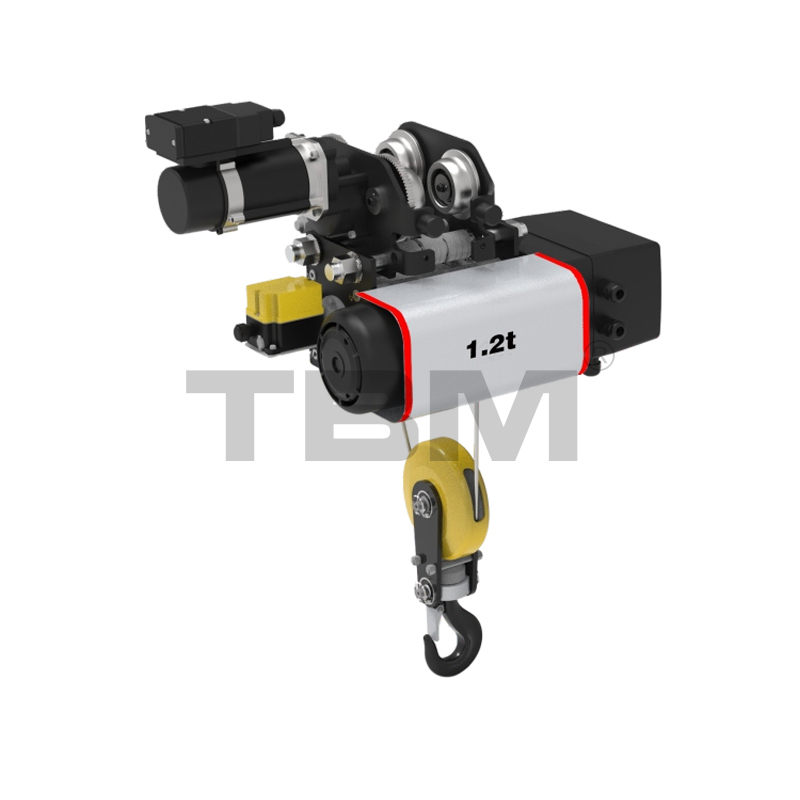 OZS Light Wire Rope Winch for Light Pulling TasksA compact winch with a small footprint, offering variable speeds and high flexibility for precise positioning in light pulling operations, with durable construction and IP55 protection.View Product →
News

The company has always attached great importance to new product development and technological innovation, focusing on a high starting point, high configuration
Product Categories
Contact Us

No. 9 Tenglong Road, Huangze Industrial Function Zone, Huangze Town, Shengzhou City, Zhejiang Province, China

info@tbmhoist.com

+86 - 18957539688
